These days, there's a lot more specialization happening in the global market for canine reproductive diagnostics. According to Grand View Research, veterinary diagnostics are becoming a pretty important part of the overall pet healthcare scene. Meanwhile, MarketsandMarkets also predicts that these diagnostic technologies will keep growing, driven by better care for pets and more professional breeding services. Because of all these trends, people around the world are now being more careful when comparing Dog Ovulation Detectors planned for 2026.
Timing? Yeah, it really matters.
As the Merck Veterinary Manual points out, a dog typically hits ovulation about two days after a surge of luteinizing hormone. After that, the eggs need a bit more time to mature before they can be fertilized. So, a good Dog Use Ovulation Detector should be able to do things like measure progesterone levels, assess luteinizing hormone, or provide complementary vaginal cytology. But, let’s be clear—no device can guarantee conception with just a single reading. Small things like sampling errors, storage issues, calibration problems, or breed differences can all throw off the timing by a bit.
When you're evaluating these tests, it’s not just about what the marketing says. You really need to dig into how sensitive they are, whether the results are consistent, the sample sizes they require, the operating conditions, and how easy it is to track results with their software. Checking if they have ISO 13485 certification is a good sign that they follow solid manufacturing processes, but don’t rely on that alone—it's not proof that the test's always accurate clinically. Plus, it's super important to see vet validations. Organizations like the American Kennel Club and experienced reproductive vets stress the importance of doing thorough health screenings before making breeding decisions.
No single ranking or device is perfect, either. A small, portable reader might be perfect for mobile clinics, but in a proper lab, a more advanced analyzer could offer better quality control. Cost, ease of use, the need for consumables, and local support can often end up being more important than just raw accuracy scores. This guide looks at the top options for 2026, focusing on real evidence. Still, a little caveat—there’s not a ton of consistent, canine-specific performance data available from every manufacturer or region, which can make comparisons tricky.

A Dog Ovulation Detector helps estimate the fertile window during a female dog’s heat cycle. It usually measures progesterone, luteinizing hormone, or changes in vaginal cells. These signals reveal biological timing, not pregnancy itself. Merck Veterinary Manual reports that ovulation commonly follows the luteinizing hormone surge by about two days. The released eggs then need another two to three days to mature.
Modern devices may use blood samples, urine strips, or clinic-based analyzers. Blood progesterone testing remains widely used because hormone levels rise in a measurable pattern. The American College of Theriogenologists recommends repeated testing, since one reading can miss a rapid hormonal change. Small sample handling errors can also affect results. That detail is easy to overlook.
A practical testing plan often begins several days after visible proestrus signs appear. A veterinarian may repeat testing every 24 to 48 hours. Breed, age, illness, stress, and individual cycle differences can shift the expected window. A 2024 Grand View Research report identified veterinary diagnostics as a growing global market, supported by demand for faster, data-based clinical decisions. Growth does not guarantee perfect accuracy. A detector still needs correct calibration and professional interpretation. Owners should record discharge changes, behavior, appetite, and test dates. The chart may look simple. Biology is not.
Top Dog Ovulation Detectors for Global Buyers?
Canine ovulation is not identified by one sign alone. The LH surge usually occurs 24–48 hours before ovulation. Veterinary theriogenology references place ovulation about two days after that surge. Canine oocytes then require another 48–72 hours to mature. Timing matters greatly.
Hormonal testing offers stronger evidence than appearance alone. Serum progesterone often rises near 2–3 ng/mL around the LH surge, but laboratory methods differ. Serial testing is therefore safer than relying on one reading. Merck Veterinary Manual recommends combining progesterone results with vaginal cytology and clinical observations. A detector can support decisions, but it cannot replace veterinary interpretation.
Physical signs remain useful in daily observation. The vulva may become softer and swollen. Discharge often changes from red to pink or straw-colored. Some females stand quietly and move their tail aside. Others show almost nothing. That inconsistency is easy to underestimate. In practice, missed ovulation can follow a single test, an irregular cycle, or poor sample timing. Research in canine reproduction, including Concannon’s peer-reviewed work in Reproduction in Domestic Animals, supports repeated hormonal monitoring rather than visual guessing. Buyers should check calibration, sample requirements, reporting units, and independent veterinary validation before choosing an ovulation detector.
| Detection method | Sample or observation | Typical finding | Ovulation timing or interpretation | Main advantages | Important limitations |
|---|---|---|---|---|---|
| Serial serum progesterone testing | Veterinary blood samples analyzed at repeated intervals | Progesterone rises from the pre-ovulatory baseline and continues increasing after the luteinizing hormone surge | Ovulation commonly occurs when progesterone is approximately 4–10 ng/mL, but assay and individual variation must be considered; many dogs ovulate about 2 days after the LH surge | Widely used for breeding-timing decisions; provides a quantitative trend | Requires blood collection, calibrated laboratory or veterinary equipment, and repeated testing; a single result can be misleading |
| Luteinizing hormone tracking | Serial serum or plasma samples | A brief LH surge precedes ovulation | Ovulation is generally expected approximately 1–2 days after the LH surge, followed by oocyte maturation | Can identify the key hormonal event when sampling is frequent and laboratory methods are suitable | The surge is short and may be missed; testing is less practical than progesterone monitoring in many clinics |
| Vaginal cytology | Cells collected from the vaginal epithelium and examined microscopically | Late estrus often shows predominantly superficial, cornified cells with few or no neutrophils | Supports identification of the fertile estrous phase but does not pinpoint ovulation as precisely as serial progesterone testing | Low-cost, informative, and useful alongside hormonal testing | Changes can vary among dogs; interpretation requires experience and should not be used alone for exact breeding dates |
| Vaginoscopy | Visual examination of vaginal mucosa using a veterinary scope | The mucosa becomes paler, more wrinkled, and may develop transverse folds during estrus | Indicates reproductive-stage progression and can complement cytology and progesterone results | Provides direct visual information and may help identify the transition toward the fertile period | Operator-dependent; not a standalone ovulation detector and requires veterinary handling |
| Reproductive ultrasonography | Ultrasound examination of the ovaries and reproductive tract | Pre-ovulatory follicles may change in shape or appearance; post-ovulatory ovarian changes can support recent ovulation | Useful for confirming follicular activity or recent ovulation when performed serially, but findings are not always definitive | Non-invasive imaging; may identify reproductive abnormalities or pregnancy-related findings later in the cycle | Requires specialized equipment and expertise; ovarian appearance differs between individuals |
| Behavioral receptivity | Standing behavior, tail deviation, acceptance of mounting, and interaction with males | The female may stand for a male and move her tail to one side during the fertile period | Suggests estrus and receptivity, but the behavior does not reliably identify the exact day of ovulation | Free, observable, and useful for deciding when to begin veterinary monitoring | Highly variable; some dogs accept mating before or after the optimal fertile window |
| Vulvar and discharge changes | Daily observation of vulvar size, firmness, and vaginal discharge | Discharge often changes from darker red to lighter pink, straw-colored, or reduced; the vulva may remain enlarged but become softer | Helpful for tracking cycle progression, but physical signs cannot accurately confirm ovulation alone | Simple, non-invasive, and suitable for daily records | Appearance varies widely; abnormal odor, pus-like discharge, fever, or lethargy requires veterinary assessment |
| Urine LH test strips | Urine collected for an at-home test | A positive result is intended to indicate an LH rise | Results should be treated as preliminary because canine LH patterns are brief and urine-based interpretation is not equivalent to validated serum testing | Convenient and potentially useful for screening when used repeatedly | Many human-oriented or unvalidated kits may not perform reliably in dogs; positive results should be confirmed by a veterinarian |
Dog ovulation detectors now range from clinic-based analyzers to simple home screening tools. The most trusted option remains blood progesterone testing. A veterinarian collects a small sample and measures hormone changes with laboratory equipment or a portable analyzer. Results can guide breeding timing more reliably than behavior alone. Timing varies between dogs.
LH urine strips offer a faster, lower-cost approach. They may identify an LH surge before ovulation, but results can be difficult to interpret in dogs. Diluted urine, missed testing times, and faint lines can create confusion. A Vet Ovulation Detector using urine should support, not replace, veterinary assessment.
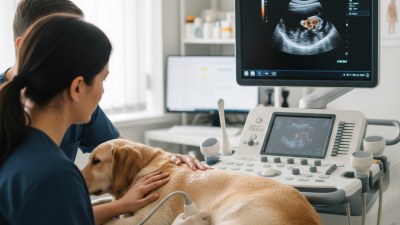
Ultrasound scanners provide another important type. A trained veterinarian can observe ovarian follicles and uterine changes during the reproductive cycle. This method does not depend on a single hormone reading. Vaginal cytology kits and digital microscopes can also show cellular changes, although they estimate cycle stages rather than confirming ovulation directly.
In practical use, combining progesterone results with ultrasound often gives stronger evidence. Still, no device is perfect. A reading may look precise while the sampling method remains weak. Breeders and clinics should record dates, hormone values, cycle signs, and previous errors before making decisions.
For global buyers, dog ovulation detectors should be compared by evidence, not attractive specifications. The Merck Veterinary Manual explains that canine ovulation follows the luteinizing hormone surge, while eggs need additional time to mature. This makes timing important.
A progesterone-based system may support more practical breeding decisions than a single visual reading, but results still depend on sampling and veterinary interpretation.
Accuracy comes first, yet published performance figures are not always directly comparable. A 2023 review in Animals reported that canine reproductive timing is affected by breed, cycle variation, and testing intervals.
Ask whether accuracy was tested against laboratory progesterone analysis. Check the sample type, detection range, calibration method, and confidence interval.
A fast result is useful. It is not automatically a better result. Some portable systems produce readings within minutes, while laboratory confirmation may take longer but offer stronger quality control.
Ease of use affects real-world reliability. A device with a small screen, clear error alerts, and simple cleaning may reduce handling mistakes in a busy clinic.
Look for disposable components, stable storage requirements, multilingual instructions, and local technical support.
Cost includes the reader, test strips, calibration, shipping, and repeat tests. The World Small Animal Veterinary Association emphasizes standardized clinical records and careful interpretation; buyers should therefore compare total testing cost per cycle, not the purchase price alone.
I would still request raw validation data before buying. Marketing claims can sound precise, but field conditions are messier.
Choosing a Pet Ovulation Detector starts with the breed, not the device. Toy breeds may show subtle heat signs, while larger breeds can produce longer, less predictable cycles. A 2023 review in Theriogenology reported that canine ovulation timing varies considerably between individuals. This makes one reading insufficient for serious breeding plans.
For natural mating, a detector may help track change, but veterinary progesterone testing remains more dependable. The BSAVA Manual of Canine and Feline Reproduction notes that ovulation usually follows the luteinizing hormone surge by about 24 to 48 hours. Eggs then need roughly two days to mature. A simple urine result cannot always show that window clearly. A neat number can still be wrong.
Choose a system that matches your goal. Pet owners may prefer easy daily monitoring and clear alerts. Professional breeders may need repeated testing, stored results, and compatibility with blood progesterone checks. For giant breeds, travel planning and semen timing can matter more than a compact screen. For older females or irregular cycles, involve a reproductive veterinarian early. Published canine fertility data also shows that pregnancy timing is more accurate when counted from ovulation, not the first day of bleeding. The detector supports judgment; it does not replace it.
Choosing a top dog ovulation detector requires more than comparing probe prices. A reliable Cattle Ovulation Detector may not suit canine samples, despite similar wording. Check sample type, detection range, calibration method, display units, and software compatibility. Ask for validation data using canine serum or vaginal samples. Request serial-numbered calibration records. Small details matter.
Standards also affect global purchasing. The World Bank’s 2023 Logistics Performance Index compares 139 economies across customs, tracking, infrastructure, and delivery speed. Ask suppliers for electrical safety, electromagnetic compatibility, quality-management, and local conformity documents. Requirements differ by destination. I would not accept a generic certificate without checking its issuing body. That mistake is easy to make.
Shipping needs equal attention. UNCTAD reports that more than 80% of global merchandise trade by volume travels by sea, but sensitive instruments may need faster air transport. Confirm shock protection, humidity limits, battery rules, insurance, customs codes, and spare-part availability. Support should include response times, remote training, and replacement procedures. Test the detector before breeding decisions. A clear manual helps. Still, no instrument removes the need for veterinary confirmation, and I may be too optimistic when delivery promises lack written conditions.
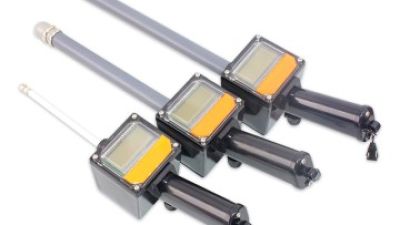
The China ECI-500 Ovulation Detector offers a data-driven approach to livestock reproduction management. Informed by global agricultural statistics and market research on the growing demand for efficient breeding technologies, it helps livestock professionals observe reproductive signals and make more timely, evidence-based decisions. By supporting accurate ovulation monitoring, the device can contribute to better breeding schedules, improved herd management, and more efficient use of labor and resources.
Featuring advanced German technology, the detector is designed for dependable performance in demanding farm environments. Its IPX7 waterproof construction provides strong protection against water exposure, while the safe bio-silicone probe offers a comfortable and hygienic experience during use. These features make the device suitable for repeated monitoring across various livestock applications.
A replaceable battery extends the product’s service life and reduces the inconvenience of replacing the entire unit when power capacity declines. Sourced from reputable suppliers in China and manufactured in a reliable factory, the ECI-500 combines practical design, durability, and operational efficiency. It is a useful tool for farms seeking to connect reproductive observations with broader agricultural data insights and improve everyday breeding workflows.
It estimates fertile timing by measuring progesterone, luteinizing hormone, or vaginal cell changes. It does not confirm pregnancy. The result reflects biology, not certainty.
Ovulation commonly follows the surge by about two days. The eggs may need another two to three days to mature. Timing varies between dogs.
Repeated blood progesterone testing is widely used in veterinary practice. It tracks a measurable hormone pattern. One test can still miss a rapid change.
A veterinarian may recommend testing every 24 to 48 hours. Repeated checks can show changing hormone levels more clearly. One reading may mislead.
Urine strips may detect an earlier hormone surge. Diluted urine, faint lines, or missed testing times can cause confusion. They should support veterinary assessment.
Ultrasound can show ovarian follicles and uterine changes. A trained veterinarian interprets these images. It does not rely on one hormone reading.
Vaginal cell changes can help estimate the cycle stage. They do not directly confirm ovulation. The picture may look clear, but interpretation remains limited.
Record test dates, hormone values, discharge, behavior, appetite, and previous errors. A simple chart helps reveal patterns. Biology is not simple.
Breed, age, illness, stress, cycle differences, calibration, and sample handling may affect results. Small handling mistakes matter. Professional interpretation remains important.
Combining progesterone results with ultrasound can provide stronger evidence. No device is perfect. The method may look precise while the sample remains weak.
A Dog Ovulation Detector helps breeders identify the most suitable breeding window by interpreting hormonal changes and physical signs associated with canine ovulation. This guide explains how these tools work, including methods that assess hormone levels, vaginal changes, or related biological indicators. It also reviews the main detector types expected to be available in 2026 and compares them by accuracy, testing speed, ease of use, sample requirements, and overall cost. Because results can vary, especially across breeds and individual dogs, detector readings should be considered alongside veterinary guidance and careful observation of reproductive signs.
For global buyers, selecting the right device involves more than comparing prices. Breed size, reproductive goals, testing frequency, local availability, shipping conditions, language support, electrical compatibility, calibration, consumables, and after-sales service are all important factors. Buyers should also check product documentation, quality standards, data privacy practices, and compatibility with professional veterinary workflows. By balancing reliable performance, practical operation, long-term support, and responsible reproductive planning, owners and breeders can choose a detector that fits their needs and location.