inquiry
Leave Your Message
0%

When you’re choosing the best Bovine Sperm Analysis system for 2026, it’s not just about comparing camera resolution or software features. Honestly, what matters more is whether the system proves itself in real lab workflows. A good fit should measure concentration, total motility, progressive motility, morphology, and viability—and keep those results consistent. On top of that, it should handle both fresh and cryopreserved bovine semen—without making you jump through extra prep hoops. It's the small stuff that really counts. A heated stage, clear sample chambers, stable lighting? Those can make a big difference in your day-to-day accuracy.

So, this guide looks at these systems from a few angles—what we’ve seen in practice, vet lab standards, and what published research says. It covers computer-assisted sperm analysis, image quality, AI, calibration, reporting, and data security. It also asks a pretty practical question: can technicians pick up the workflow quickly? Because even a fancy platform can end up disappointing if its interface slows down everyday testing. And honestly, solid customer support and clear validation data deserve just as much attention. Honestly, a manufacturer's claims by themselves? They don't really cut it. And let's be real—no system out there is ever going to be perfect.

When you're dealing with bovine sperm samples, there's a lot of variation—different bulls, how the sample was collected, how it was stored, and even which lab handled it. Algorithms can also get tripped up, maybe labeling debris or odd-looking sperm cells the wrong way. That's why human review still matters, especially if the results don't seem to line up. So when we talk about the “best” system, it shouldn't just mean the most accurate one. It should be the one that strikes the right balance between accuracy, repeatability, usability, service, and overall cost. And honestly, readers should weigh independent evidence against what they actually need to test for. I mean, this approach helps folks make informed choices, and it also acknowledges that the tech we have today isn’t quite there yet — there’s still room to improve.
What Is the Best Bovine Sperm Analysis System in 2026?

What Is a Bovine Sperm Analysis System?

What Is the Best Bovine Sperm Analysis System in 2026?

A bovine sperm analysis system is a laboratory workflow for measuring semen quality after collection or thawing. It usually combines a microscope, temperature-controlled viewing chamber, imaging software, and structured reporting. The system evaluates concentration, total motility, progressive motility, viability, morphology, and movement patterns. These measurements help technicians assess breeding suitability and monitor processing consistency.

A reliable system begins with careful sample handling. A frozen straw should be thawed at a controlled temperature and mixed gently. The sample must enter a clean chamber without bubbles. Even small temperature changes can alter sperm movement. Debris may also confuse automated image analysis. In practical laboratory work, technicians should examine representative fields rather than trusting one image. Replicate readings are valuable.

Quality control matters more than impressive software features. Laboratories should use written procedures, regular calibration, trained operators, and documented reference samples. Results should be checked against internal quality limits and reviewed when unusual values appear. Automated classification is useful, but it is not perfect. It may mistake debris for sperm or classify slow cells inconsistently. Morphology assessments can also vary between observers. That deserves attention. The best bovine sperm analysis system in 2026 should support professional judgment, transparent data, and repeatable testing rather than replace experienced technicians. Its value depends on the entire workflow, including sample preparation, environmental control, maintenance, and honest interpretation of uncertain results.

What Is the Best Bovine Sperm Analysis System in 2026?

Key quality indicators commonly used when evaluating bovine semen samples

A reliable bovine sperm analysis system should measure total motility, progressive motility, viability, and normal morphology with consistent, objective results. The chart shows commonly used minimum reference levels for ejaculated bovine semen; exact acceptance limits may vary according to laboratory protocols, breed, collection method, and semen-processing procedures.

How Bovine Sperm Analysis Systems Measure Semen Quality

What Is the Best Bovine Sperm Analysis System in 2026?

How Bovine Sperm Analysis Systems Measure Semen Quality

A Bovine Semen Analysis Machine should measure more than a single motility percentage. Computer-assisted sperm analysis tracks concentration, total motility, progressive movement, velocity, and movement patterns. A technician can see weak cells drifting in circles beside fast, forward-moving sperm. This detail supports better breeding decisions.

Professional breeding-soundness guidance commonly uses 30% progressive motility and 70% normal morphology as practical minimums for acceptable bull semen. These benchmarks are associated with Society for Theriogenology recommendations and bovine reproductive practice. However, they are screening thresholds, not guarantees of fertility. The International Committee for Animal Recording also emphasizes standardized sampling, calibration, and repeatable recording in semen evaluation.

Good systems combine optical imaging with controlled sample temperature. They should analyze several fields, reduce operator bias, and preserve raw results for review. Morphology analysis can identify head defects, bent tails, retained droplets, and damaged midpieces. Fluorescent tests may assess plasma-membrane or acrosome integrity, while DNA-fragmentation testing adds another layer of evidence.

Numbers can mislead.

A warm slide may inflate motility temporarily. Thick samples can hide immobile cells. Even automated software needs careful threshold settings and trained oversight. Field experience suggests reviewing borderline samples twice, preferably with a fresh aliquot. The best 2026 system is therefore not simply the fastest instrument. It is the one producing consistent, traceable measurements under real laboratory conditions.

Key Performance Criteria for Comparing Analysis Systems

When comparing bovine sperm analysis systems, performance should guide the decision, not attractive software features. The best system measures motility, concentration, morphology, viability, and acrosome status with consistent accuracy. These indicators directly affect semen evaluation and breeding decisions.

Repeatability matters greatly. A system should produce similar results across operators, sample days, and laboratories. Video-based tracking can reveal progressive movement, but poor lighting or thick samples may distort results. Speed helps. However, rapid testing is not valuable when measurements lack validation. Each system should support calibration checks, reference samples, and documented quality-control procedures.

Sample handling also deserves close attention. Temperature changes, dilution errors, and delayed analysis can alter sperm movement within minutes. Clear instructions reduce these risks. Data should remain traceable, with stored images, timestamps, operator details, and exportable reports. No instrument removes human judgment. Local validation is still necessary because laboratory conditions differ. A small weakness may become important when hundreds of samples are processed weekly. Technicians should compare system results with established laboratory methods before routine adoption. Thresholds may need adjustment, and that is not a failure. It is part of responsible validation.

What Is the Best Bovine Sperm Analysis System in 2026? - Key Performance Criteria for Comparing Analysis Systems

Performance criterion Conventional microscopy Computer-assisted sperm analysis Flow-cytometry-based analysis Integrated multimodal imaging system
Primary measurement principle Visual assessment under a microscope, usually with a counting chamber. Digital video tracking of individual sperm cells and movement paths. Fluorescent labeling and optical detection of cells as they pass through a laser interrogation point. Automated image analysis combined with optional fluorescence or viability measurements.
Concentration measurement Possible, but strongly dependent on dilution, chamber depth, counting rules, and operator training. Automated cell counting with repeatable fields; requires control of focus, debris, aggregation, and dilution. High cell-count capacity and strong statistical precision; fluorescent compensation and gating must be validated. Automated counting with image-based exclusion of debris and configurable quality-control rules.
Typical concentration range Best suited to diluted samples within the validated counting-chamber range. Commonly suitable for approximately 10–200 million sperm/mL after method-specific dilution. Broad analytical range after dilution and gating; the validated range depends on the cytometer and assay. Typically suitable for approximately 10–200 million sperm/mL, subject to optical validation.
Total and progressive motility Visual percentage estimates; results can vary between analysts and observation times. Provides objective total motility and algorithm-defined progressive motility. Usually not the primary strength; motility requires an additional imaging or specialized flow-based approach. Objective motility classification with the option to combine movement, viability, and morphology results.
Motion parameters Usually limited to visual motility categories. May report VCL, VSL, VAP, LIN, STR, WOB, ALH, and BCF when validated. Limited unless paired with a dedicated motion-analysis module. Detailed trajectory analysis with configurable thresholds and stored cell tracks.
Viability assessment Possible using stains such as eosin–nigrosin; interpretation is partly manual. Possible with compatible fluorescent or bright-field staining workflows. Strong capability using membrane-integrity and metabolic fluorescent probes. Supports automated live/dead classification when validated with the selected stain.
Morphology assessment Widely used, but subjective and sensitive to preparation and analyst experience. Can measure head and midpiece features; classification accuracy depends on segmentation and training data. Generally requires imaging cytometry or a separate microscopy method. Automated morphology classification with review images for borderline or abnormal cells.
Acrosome and mitochondrial assessment Available with validated fluorescent stains, but generally manual. Available when fluorescence imaging and appropriate filters are included. Strong capability for multiparameter fluorescence assays, including acrosome status and mitochondrial membrane potential. Can combine morphology with acrosome, mitochondrial, and membrane-integrity measurements.
Repeatability and operator dependence Highest operator dependence; standardized training and duplicate counts are important. Lower operator dependence after standardizing sample preparation, frame rate, focus, and analysis settings. High analytical repeatability, provided staining, compensation, gating, and instrument quality control are consistent. Potentially high repeatability through locked methods, automated workflows, and audit trails.
Sample volume and preparation Low sample volume; usually requires dilution and careful chamber loading. Low volume; dilution and temperature control are essential for reliable tracking. Usually requires dilution, staining, incubation, and sometimes washing steps. Low-to-moderate volume; workflow depends on whether fluorescence assays are used.
Throughput Low to moderate; manual counting and recording limit daily capacity. Moderate to high for routine motility and concentration testing. High for large cell populations and multiparameter measurements, but staining adds preparation time. Moderate to high, depending on automation, sample loading, and the number of measured endpoints.
Data reporting Often manual or spreadsheet-based, with limited image traceability. Usually provides automated reports, raw tracks, summary statistics, and exportable files. Provides event-level data, histograms, gating plots, and multiparameter results. Best suited to centralized databases, image review, user permissions, and audit trails.
Temperature control Often manual; temperature changes can affect motility and velocity results. A heated stage or controlled measurement temperature is strongly recommended. Usually controlled by the sample-handling and flow-cell configuration. Should include monitored temperature control for reproducible bovine semen measurements.
Validation requirements Analyst training, duplicate counts, reference samples, and inter-observer comparison. Method validation against a reference procedure, repeatability testing, and fixed acquisition settings. Fluorescence compensation, gating validation, stain stability, controls, and instrument quality checks. Full workflow validation covering image segmentation, staining, algorithms, operator review, and data integrity.
Best use case Small laboratories, basic screening, and settings with limited capital equipment. Routine semen-quality control requiring objective motility, concentration, and movement parameters. Research and advanced quality control requiring detailed viability, acrosome, mitochondrial, or DNA-related assays. High-throughput laboratories seeking standardized, traceable, multimodal bovine sperm assessment.
Overall suitability for a 2026 laboratory Acceptable for basic testing, but less suitable when high reproducibility and digital traceability are required. Strong general-purpose option for routine bovine sperm analysis when properly calibrated and validated. Best for advanced multiparameter testing rather than routine motility-only workflows. Most comprehensive option when the laboratory needs standardized automation, image evidence, and multiple sperm-function endpoints.
Interpretation note: The ranges and capabilities shown are typical method-level expectations, not guaranteed specifications. Results depend on sample dilution, chamber or flow-cell design, temperature, staining protocol, image-acquisition settings, sperm concentration, debris level, software thresholds, and laboratory validation. A suitable system should be evaluated against an established reference method using bovine semen samples representative of the intended workflow.

Leading Technologies Used in Bovine Sperm Evaluation

What Is the Best Bovine Sperm Analysis System in 2026?

Leading Technologies Used in Bovine Sperm Evaluation

Modern Vet Sperm Analysis combines computer-assisted sperm analysis, flow cytometry, and high-resolution imaging. These tools measure concentration, total motility, progressive movement, and velocity. ICAR’s technical guidance recommends reporting these measures separately, because one percentage cannot describe semen quality accurately. A fast cell may still move poorly.

CASA systems track thousands of sperm cells through video frames. This reduces visual subjectivity during routine laboratory checks. Flow cytometry adds deeper information, including membrane integrity, mitochondrial activity, and acrosome status. A 2023 review in Animal Reproduction Science reported that automated systems improve repeatability, but results still depend on sample preparation and instrument settings. Small errors matter. A warm slide can change movement quickly.

The best system is not always the most expensive one. It should provide calibrated imaging, standardized staining, secure data storage, and clear quality-control records. WOAH laboratory guidance also emphasizes validated methods, trained operators, and traceable procedures. Field teams need rugged equipment, especially when semen is tested near collection areas. I have seen clean-looking samples produce inconsistent readings after delayed analysis. That weakness deserves attention. Future platforms may use artificial intelligence to classify abnormal sperm, but human review remains necessary when morphology and movement disagree. Calibration logs, duplicate tests, and regular maintenance make the results more dependable.

Step-by-Step Workflow for Bovine Sperm Analysis

What Is the Best Bovine Sperm Analysis System in 2026?

Step-by-Step Workflow for Bovine Sperm Analysis

Reliable bovine sperm analysis starts before the sample reaches the instrument. FAO’s 2024 statistical data place the global cattle population at roughly 1.5 billion animals, making consistent reproductive testing commercially important. Record the bull identification, collection time, temperature, extender, and storage interval. Keep the sample near 35–37°C during evaluation. A cold slide can change motility within seconds.

Mix the sample gently, then measure concentration with a calibrated photometer or counting chamber. Assess total and progressive motility using computer-assisted tracking. Examine morphology on a stained smear, checking bent tails, detached heads, and cytoplasmic droplets. ICAR guidance stresses controlled preparation, repeatability, and traceable records. Run duplicate readings when results look unusually high or low. A Canine Sperm Analysis Machine may offer useful imaging concepts, but bovine-specific calibration remains essential. Species assumptions can quietly create bad decisions.

Tips: Use the same dilution ratio every time. Clean optics immediately after testing. Photograph questionable fields for review. Do not trust one impressive reading. I still recheck borderline samples, because operator handling can influence the result. A good system supports judgment; it does not replace it. Calibration logs, control samples, and technician training often matter more than a crowded feature list.

How to Select the Best System for Different Farm Needs

The best bovine sperm analysis system in 2026 depends on farm decisions, not a flashy feature list. A small breeding operation may need compact equipment, simple screens, and fast checks between collections. A large center needs automated counting, repeatable imaging, secure records, and higher sample throughput. Bull Sperm Analysis should assess motility, concentration, morphology, and viability consistently. Those results matter only when technicians can reproduce them.

For pasture-based farms, choose equipment that tolerates dust, temperature changes, and limited laboratory space. Battery operation and sealed components can reduce interruptions. Farms with a resident veterinarian may benefit from advanced image review and trend reports. Remote guidance helps, but it cannot replace local competency. Ask for validation data, calibration instructions, quality-control samples, and documented service response times. Independent comparison with a trusted reference method is wise before routine adoption.

A practical trial should include fresh and stored semen, different bulls, and operators with unequal experience. Record setup time, cleaning effort, rejected readings, and agreement with expert review. Do not judge the system from one impressive demonstration. Samples are imperfect. Lighting, dilution, debris, and rushed handling can distort results.

No system is perfect. I would also budget for training and replacement parts, because the cheapest purchase may become the slowest workflow. Selection should remain flexible as herd size, staff skills, and reproductive goals change.

Animal Sperm Quality Analysis: Grand View Research’s 2024 Veterinary Diagnostics Report & ECI-SpermPro

Animal sperm quality analysis is becoming an increasingly important component of modern veterinary diagnostics and livestock breeding management. Reliable evaluation of semen can support more informed breeding decisions, improve reproductive efficiency, and help laboratories identify variations in sperm performance. Conventional visual assessment may be influenced by operator experience and testing conditions, making objective measurement especially valuable for breeding centers, veterinary facilities, and large-scale farms.

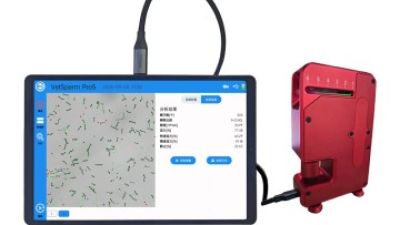
A portable, high-precision Animal Sperm Quality Analyzer addresses these needs through advanced microscopic imaging and automated movement tracking. The system evaluates key kinematic parameters, including straight-line velocity, curvilinear velocity, and progressive motility percentage, while also estimating sperm concentration with consistent quantitative results. An AI recognition model designed for animal reproductive characteristics helps distinguish and assess sperm movement more efficiently than subjective observation alone. Its compact and robust construction supports on-site testing, while interference-resistant performance allows dependable operation in demanding agricultural environments. By combining rapid analysis with reproducible data, this type of technology can strengthen semen quality monitoring and provide practical support for veterinary laboratories and livestock reproduction programs.

FAQS

What does a bovine sperm analysis system measure?

It measures concentration, total motility, progressive movement, velocity, and movement patterns. Fast cells may move forward, while weak cells drift in circles. Numbers tell only part of the story.

Why is progressive motility important?

Progressive motility shows whether sperm move forward effectively. A practical screening reference is about 30% progressive motility. This is not a fertility guarantee.

What morphology details should technicians check?

They should examine heads, tails, midpieces, and cytoplasmic droplets. Common defects include bent tails, detached heads, and damaged midpieces. Small defects matter.

How should sample temperature be controlled?

Keep the sample near 35–37°C during evaluation. A cold slide can change motility within seconds. A warm slide may temporarily increase movement.

Why should technicians repeat unusual results?

Thick samples can hide immobile cells and distort measurements. Review borderline results using a fresh aliquot when possible. I would not trust one impressive reading.

What records should accompany each semen test?

Record bull identification, collection time, temperature, extender, and storage interval. Keep calibration logs and raw results for later review. Traceability prevents guesswork.

How can technicians reduce testing errors?

Use the same dilution ratio and examine several microscope fields. Clean the optics immediately after testing. Photograph questionable fields for discussion.

Can automated software replace technician judgment?

No. Software still depends on threshold settings, sample preparation, and calibration. Training remains important, especially with borderline samples. A good system supports judgment.

Conclusion

Choosing the best bovine sperm analysis system in 2026 requires more than comparing basic equipment features. A reliable Bovine Sperm Analysis solution should provide accurate, repeatable measurements of sperm concentration, motility, movement patterns, morphology, viability, and membrane condition. Modern systems may combine microscopy, automated imaging, computer-assisted evaluation, and fluorescence-based testing to create a more complete picture of semen quality. Performance should be judged by measurement consistency, ease of calibration, sample-handling efficiency, data management, testing speed, and suitability for routine laboratory or farm use.

A typical workflow includes collecting and preparing the semen sample, controlling temperature, loading the sample correctly, capturing images, analyzing sperm characteristics, reviewing quality indicators, and storing results for comparison. The ideal system depends on each farm’s scale, budget, staff expertise, testing frequency, and breeding goals. Smaller operations may prioritize simplicity and portability, while larger facilities may need automation, high throughput, detailed reporting, and integration with existing records. A balanced evaluation helps users select a practical system that supports informed breeding decisions and consistent semen-quality monitoring.
Ethan

Ethan

Ethan is a dedicated marketing professional at Sichuan Eacenic Science & Technology Group Co., Ltd., a company established in 2009 that specializes in the design, manufacture, and sales of veterinary medical electronics and integrated circuits. With a deep understanding of the company’s products,......
Previous China Top 10 Ultrasound Machines for Veterinary Use