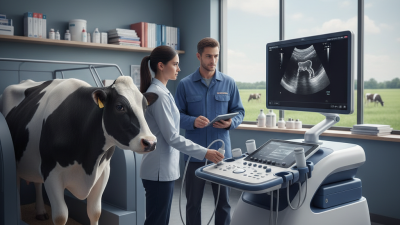
When you're trying to pick the best Portable Animal Ultrasound Machine from China, it’s more than just comparing prices online. Whether you’re running a vet clinic, managing a farm, or out on the road with mobile services, the equipment you choose needs to work reliably in real-world conditions. A good machine should give you clear images of the abdomen, reproductive organs, or tendons. Plus, it has to stay practical—think tight spaces inside a busy barn or a vehicle bouncing around while you're working.
Smart buyers often look at things like probe options, how deep the images come through, battery life, screen brightness, and how well Doppler features perform. If you’re doing long exams, a lightweight design really makes a difference. Waterproof probes and tough, easy-to-clean housings can save you from hassle caused by dust, hair, or routine washdowns. Reputable brands like Mindray Animal Medical show how solid manufacturers combine medical engineering with well-structured production processes. Still, every model should be tested independently—don’t just go on what you see in a brochure.
A responsible Chinese supplier should be able to share detailed specs, offer training, provide warranty info, and be quick to respond when you need help. Always check their certifications and quality records—it’s worth doing your homework. Live demos are way more helpful than fancy brochures. Ask if they can scan a real animal or a realistic training model. And don’t just look at the images when everything’s perfect—watch how the probe moves and the image updates.
Let’s be honest: no supplier is flawless. That’s something to keep in mind. Some companies might give you top-notch hardware but fall short on after-sales support, while others might respond fast but not have much veterinary-specific expertise. So, it’s a smart idea to compare references, service options, how easy the software is to use, and the overall costs of ownership.
Remember, the best portable ultrasound machine isn’t necessarily the cheapest. It’s the one that helps you make accurate calls, keeps animal care a priority, and stays reliable in the long run. Taking your time to select carefully is worth it—trying to rush through the purchase can end up costing more later on.
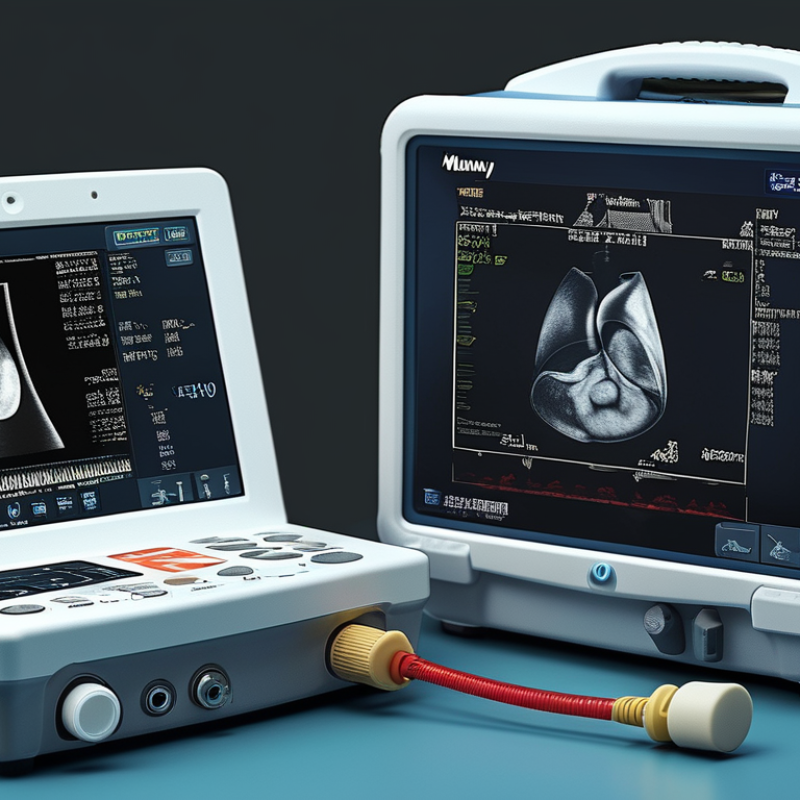
A portable animal ultrasound machine is a compact diagnostic device for examining soft tissues inside an animal’s body. It uses high-frequency sound waves to create live images on a small screen. Unlike X-ray equipment, it does not use ionizing radiation. Veterinarians commonly use it for pregnancy checks, abdominal examinations, heart assessments, and muscle evaluation. The system usually includes a handheld probe, display, battery, charging unit, and image-storage function.
In practical use, portability matters. A veterinarian can carry the machine into a stable, farm, or treatment room. A clean probe with suitable gel helps produce clearer images. The operator may watch fetal movement, measure organs, or identify unusual fluid. Small screens can be useful, but they may hide fine details in bright outdoor conditions. Battery life also deserves attention. A device that fails during an examination creates an avoidable problem.
Image quality depends on probe frequency, animal size, hair thickness, and operator skill. Training is essential because a convincing image can still be interpreted incorrectly. The machine supports clinical judgment; it does not replace it. It should not be confused with a Portable Animal Sperm Quality Analyzer, which evaluates semen-related indicators rather than internal anatomy. Regular disinfection and equipment checks improve reliability. Still, even careful users can miss subtle findings, so uncertain results may require a more complete examination.
A portable animal ultrasound machine is a compact diagnostic imaging system that uses high-frequency sound waves to create real-time images of internal organs, muscles, blood vessels, and reproductive structures. The chart shows typical clinical probe-frequency ranges used in Veterinary Ultrasound. Lower frequencies provide deeper penetration, while higher frequencies provide better detail for superficial tissues.
Typical veterinary frequency ranges vary by patient size, anatomy, examination depth, and transducer design. Portable systems commonly support multiple probes so veterinarians can switch between abdominal, cardiac, superficial, and reproductive examinations.
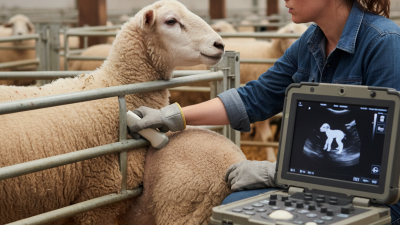
Portable animal ultrasound equipment is essential when examinations cannot wait for a clinic. Veterinarians use it for pregnancy checks in cattle, sheep, goats, and horses. A compact scanner can travel through barns, paddocks, and remote farms. It helps identify fetal viability, uterine conditions, and reproductive timing. In field work, a bright screen and reliable battery matter more than decorative features. Mud happens. So does rain. The operator needs a probe that remains practical with gloves and limited space.
Emergency and mobile care create another strong need. A portable unit can assess abdominal fluid, bladder distension, heart motion, and lung changes beside a road or stable. It also supports tendon and muscle examinations in athletic horses after training injuries. Small animal practitioners may use it during house calls, shelters, or community clinics. These settings require fast scanning, simple controls, and easy disinfection between patients. A lightweight design reduces handling stress, especially when an anxious animal cannot remain still.
However, portability does not replace training or clinical judgment. Image quality may fall with poor contact, thick coats, movement, or weak battery power. Experienced users should match the transducer to the species and examination depth. They should record patient details and confirm uncertain findings with a complete clinical assessment. I have seen convenient equipment encourage rushed decisions. That is a weakness worth admitting. The best portable system supports careful work, but it cannot turn limited information into certainty.
China Best Portable Animal Ultrasound Machine Supplier?
How to Evaluate Chinese Portable Animal Ultrasound Suppliers
A reliable supplier should explain performance with testable details, not vague promises. Ask for probe frequency, scanning depth, image resolution, Doppler options, battery duration, and waterproof ratings. A Portable Dog Ultrasound Machine should produce clear images in clinics, farms, and outdoor examinations. Request sample scans of abdominal organs, pregnancy checks, and cardiac views. Blurry images may indicate weak processing or unsuitable probes.
Check how the supplier controls production. Ask whether each machine receives calibration, electrical safety testing, and final image-quality inspection. Traceable serial numbers and written inspection records show stronger quality management. Review technical files, training materials, warranty terms, and repair procedures before placing an order. A serious supplier should provide realistic delivery times and explain replacement-part availability.
Do not select by price alone. A low quotation may exclude software updates, accessories, or after-sales support. Ask for a video call showing the factory, testing area, packaging, and operating interface. Independent sample testing is safer than trusting catalog images. Still, one demonstration is not enough. Battery performance may change after repeated use, and field conditions can expose weaknesses. I would compare two or three suppliers using the same checklist, although that process takes longer than expected. Clear communication matters too. Slow replies can become costly after shipment.
| Evaluation Dimension | Recommended Weight | Practical Benchmark for Portable Animal Ultrasound Equipment | Verification Documents or Test Method | Evaluation Result |
|---|---|---|---|---|
| Regulatory Compliance | 20% | Evidence of a quality management system appropriate for medical-device manufacturing, plus applicable market-entry documentation for the destination country. | Request current certificates, declarations of conformity, product labeling samples, and registration information required in the target market. Check certificate scope and validity directly with the issuing organization. | Pass / Verify |
| Image Quality and Core Modes | 15% | Real-time B-mode should be available. Color Doppler and spectral or power Doppler are useful for vascular, reproductive, abdominal, and cardiac examinations when clinically required. | Conduct a live demonstration using representative animal models or stored clinical cases. Compare penetration, contrast, detail resolution, Doppler sensitivity, and image stability. | Live Test Required |
| Probe Selection | 12% | Common probe options include convex, micro-convex, linear, and rectal or transvaginal probes. Typical operating frequencies range from approximately 2 to 12 MHz, depending on probe type and application. | Confirm probe frequency ranges, connector compatibility, waterproof rating, cable length, sterilization limits, and availability of replacement probes. | Verify by Datasheet |
| Target-Animal Application Coverage | 10% | Assess suitability for the intended species and examinations, such as canine and feline abdominal scans, equine tendon and reproductive work, bovine pregnancy diagnosis, or small-ruminant use. | Request application protocols, sample images, probe recommendations, and references from users working with the same species and examination types. | Application Specific |
| Portability and Battery Performance | 10% | A field-use system should provide a practical battery runtime, a visible display, manageable weight, and protection suitable for transport between examination locations. Battery runtime must be tested under actual scanning conditions. | Check total system weight, battery capacity, charging time, operating temperature range, ingress protection information, and runtime using continuous scanning rather than standby time. | Field Test Recommended |
| Workflow and Data Management | 8% | Useful functions may include patient records, measurements, annotations, cine-loop review, image export, and commonly supported file formats such as DICOM or standard image files. | Test image storage, export, backup, user access, report generation, date and patient-data accuracy, and compatibility with the buyer’s practice-management workflow. | Demonstration Required |
| Electrical and Safety Testing | 8% | Electrical safety, electromagnetic compatibility, thermal performance, and essential performance should be assessed against the standards applicable to the intended market and device classification. | Request complete test reports rather than certificate covers only. Confirm model numbers, tested configurations, probe combinations, and report dates match the offered equipment. | Document Review |
| Manufacturing and Quality Control | 7% | A reliable supplier should have documented incoming inspection, assembly controls, calibration procedures, final functional testing, serial-number traceability, and corrective-action processes. | Request a quality-control checklist, sample inspection report, calibration records, production photographs or audit access, and the process for handling nonconforming units. | Audit Recommended |
| Warranty and After-Sales Support | 5% | Evaluate warranty duration, coverage for the main unit and probes, response time, remote troubleshooting, repair process, and availability of replacement parts. | Obtain the written warranty, service-level commitments, repair turnaround targets, technical-support channels, and a list of consumable or replaceable components. | Contract Review |
| Total Cost of Ownership | 5% | Compare the purchase price together with probe costs, freight, import duties, software fees, batteries, calibration, training, maintenance, and expected replacement costs. | Request an itemized quotation with Incoterms, lead time, packaging details, spare-part prices, payment terms, and costs for future probes or accessories. | Compare in Writing |
A high-quality portable Veterinary Ultrasound Machine starts with dependable imaging, not a glossy product description. Grand View Research estimates the veterinary ultrasound market will grow at roughly 6% annually through 2030. That growth reflects rising demand for faster, non-invasive diagnosis in clinics and mobile practices.
Clear images matter most. The system should provide suitable probes for abdominal, cardiac, and reproductive examinations. A microconvex probe can fit small abdominal spaces, while a linear probe helps examine superficial tissues. Adjustable gain, depth, focus, and Doppler settings support more accurate evaluations. Poor presets waste time. They also encourage avoidable interpretation errors. I would request sample scans from real animals, not only laboratory images.
Portability must include practical strength. A unit should offer a bright screen, physical controls, long battery life, and a stable probe connection. Many field users value a device under five kilograms, but lighter is not always better. A weak battery or fragile casing creates problems during farm visits. According to MarketsandMarkets, continued growth in point-of-care veterinary imaging is linked to mobile diagnosis and clinic efficiency. Reliable suppliers should provide calibration records, software updates, operator training, and responsive technical support. Compliance with IEC 60601-2-37 is also worth checking. Numbers can mislead. Hands-on testing remains essential.
When comparing a China-made Portable Vet Ultrasound Machine, price is only the first filter. Grand View Research estimated the global veterinary ultrasound market at about USD 190 million in 2023, with steady growth through 2030. That growth attracts new suppliers, but specifications can be presented inconsistently. Request a complete quotation, including probes, delivery, training, taxes, software, and replacement parts. A low quote may exclude the convex probe your clinic actually needs.
Certification requires careful checking. ISO 13485 shows a quality-management system, but it does not prove every device is safe. Ask for applicable IEC 60601-1 electrical safety test reports, electrical leakage results, and documented quality-control procedures. Confirm whether CE or other market approvals apply to the exact model and intended use. Certificates should show the manufacturer, model number, issuing body, and valid dates. Screenshots are not enough. The World Health Organization’s guidance on medical-device procurement also emphasizes verification, traceability, and user training.
After-sales support often decides the real cost. Request written warranty terms, repair turnaround times, spare-probe availability, battery replacement options, and software-update policies. A useful supplier should provide remote troubleshooting and practical scanning instruction. Ask for two veterinary customer references, preferably clinics using similar animals. I once underestimated probe durability because the demonstration used a calm dog on a clean table. Field conditions are harder. Dust, movement, and hurried cleaning expose weaknesses quickly. Price still matters, but unreliable support can make a cheaper machine expensive.
Selecting the best China-based supplier requires more than comparing prices. FAOSTAT recorded over 1.1 billion goats worldwide in 2022, increasing demand for practical field diagnostics. A Portable Goat Ultrasound Machine should produce clear reproductive images in bright barns, uneven fields, and low-temperature conditions. Ask for probe frequency ranges, image depth, battery duration, waterproofing, and storage capacity. A supplier should also provide calibration records, user training, and documented quality controls. ISO 13485 certification can indicate a structured medical-device process, but it does not replace independent product testing.
Request sample images from goats, sheep, and cattle before ordering. Check whether the supplier supports pregnancy scanning, follicle assessment, and basic abdominal examinations. Grand View Research has reported steady growth in the global veterinary ultrasound market, with portable systems gaining attention because of their mobility and lower operating burden. However, market growth does not guarantee reliable service. Confirm warranty terms, spare-probe availability, software updates, and response times in writing. A video demonstration is useful. A live test is better. One common mistake is choosing the lightest unit without checking screen visibility or probe durability. I would also question unusually low quotations. They may reflect missing accessories, limited training, or weak after-sales support. A careful supplier should welcome technical questions and allow your veterinary team to evaluate images before payment.
The veterinary ultrasound market is gaining momentum as clinics and mobile practitioners seek faster, non-invasive diagnostic tools. Grand View Research estimates that the global market could expand at a compound annual growth rate of more than 6% through 2030, supported by rising companion-animal ownership, preventive care, and demand for point-of-care imaging. Fortune Business Insights also projects steady market growth through the early 2030s, with portable systems becoming increasingly important in emerging markets, including China. These trends create opportunities for suppliers offering practical Doppler solutions that balance image performance, portability, and cost efficiency.
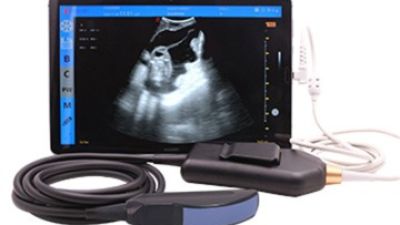
Designed for flexible veterinary use, this China-sourced Doppler probe supports multiple languages and allows users to configure settings for different operating preferences. A data-cable connection to a mobile phone or iPad helps provide a stable signal and clear imaging during examinations, whether in a clinic, farm, or outdoor setting. Its independent probe structure is compact and easy to transport, helping veterinarians perform assessments away from fixed equipment. The waterproof housing also supports safe rinsing after use, improving convenience in demanding working environments. For distributors and veterinary professionals seeking dependable products from Chinese factories, this solution aligns with the market’s shift toward accessible, mobile, and user-friendly ultrasound technology.
: It is a compact device for viewing soft tissues inside an animal’s body. It uses high-frequency sound waves, not ionizing radiation. The system usually includes a probe, screen, battery, charger, and storage function.
Veterinarians can carry it into stables, farms, treatment rooms, or outdoor areas. It supports pregnancy checks, abdominal scans, heart assessments, and muscle examinations. Portability saves time during field visits. Battery failure matters.
Use a clean probe and suitable ultrasound gel. Probe frequency should match the animal’s size and examination area. Thick hair, movement, and poor contact can reduce image quality. Preparation matters.
Image quality depends on probe frequency, animal size, hair thickness, and operator skill. Training is essential for correct positioning and interpretation. A convincing image can still be interpreted incorrectly. Human judgment remains necessary.
No. It supports clinical judgment but does not replace it. Subtle findings may remain hidden, especially during movement or poor contact. Uncertain results may require another examination or additional testing. Ultrasound has limits.
Request a complete quotation with probes, delivery, taxes, training, software, and spare parts. A low price may exclude an important convex probe. Compare the full operating cost, not only the purchase price. Cheap can become expensive.
Ask for quality-management evidence, electrical safety reports, and leakage-test results. Check whether ISO 13485 applies to the manufacturer and device process. Confirm applicable IEC 60601-1 testing for the exact model. Verify the model number, issuing body, and certificate dates. Screenshots are not enough.
Request written warranty terms and clear repair turnaround times. Check spare-probe availability, battery replacement, and software-update policies. Remote troubleshooting can help during a field examination. Ask for references from clinics using similar animals. Support affects real cost.
Disinfect the probe according to the equipment instructions after use. Inspect cables, charging parts, batteries, and connectors regularly. Store the unit away from dust, moisture, and direct heat. Field conditions are harder. Careful cleaning can still miss small faults.
A Portable Animal Ultrasound Machine is a compact diagnostic device designed to provide real-time imaging in clinics, farms, ambulatory services, and field environments. It is especially useful for pregnancy checks, reproductive management, abdominal examinations, cardiac assessment, musculoskeletal evaluation, and urgent veterinary care where transporting animals is difficult. When assessing Chinese suppliers, veterinary practices should examine product reliability, image clarity, probe selection, battery performance, portability, software functions, and ease of operation. A high-quality system should deliver stable images, practical measurement tools, durable construction, and compatibility with the intended animal species and clinical applications.
Price should be evaluated together with certifications, quality control, warranty terms, training, spare-parts availability, and technical support rather than as the only purchasing factor. Buyers should request detailed specifications, service conditions, delivery information, and product demonstrations before making a decision. The best supplier is one that offers consistent manufacturing standards, responsive communication, transparent pricing, dependable after-sales assistance, and solutions suited to the practice’s workload, budget, and long-term diagnostic needs.