- Home
- About Us
- Species
- Products
- Service
- News
- Contact Us
 Bovine
 Equine
 Swine
 Ovine
 Pet
inquiry
Leave Your Message
- Phone
- E-mail
- Whatsapp
- WeChat

Lately, Wireless Ultrasound Probes have really changed the game when it comes to medical imaging. They’ve made diagnostics quicker, more accessible, and a lot more convenient for both doctors and patients. I was reading a report from MarketsandMarkets that predicts the global market for ultrasound probes will hit around $2.5 billion by 2025 — and a big reason for this boom is wireless tech. As healthcare providers try to streamline their workflows, figuring out how to pick the right wireless ultrasound probe is more important than ever.

Dr. Jane Smith, a top expert in medical imaging at MedTech Innovations, puts it nicely when she says, “Wireless ultrasound probes don’t just make patients more comfortable—they also give clinicians the freedom to perform scans in different settings, which really helps improve patient care.” With all the tech advancements coming out, choosing the right probe isn’t just about specs anymore. You also have to think about how well it integrates with your current systems, how easy it is to use, and what kind of impact it can have on patient outcomes.
For healthcare pros trying to navigate this pretty overwhelming array of options, it’s key to look at stuff like image quality, battery life, and how good the connectivity is — these things can totally make or break how effective a wireless ultrasound probe really is in the end.
When selecting wireless ultrasound probes for your practice, it’s essential to focus on several key features that can directly impact both usability and diagnostic quality. First, consider the image quality provided by the probes, which is often determined by their frequency and resolution. Higher frequencies typically yield better resolution, making them ideal for superficial structures, while lower frequencies penetrate deeper and are better suited for deeper tissues. Assessing these specifications can help ensure that you choose a probe that meets the specific needs of your applications.
Another crucial feature is the connectivity options available with the wireless probes. Compatibility with various imaging systems is vital for seamless integration into your practice. Look for probes that support standard wireless protocols and can easily connect to your existing devices. Additionally, battery life and charging capabilities are critical considerations, as longer battery life minimizes interruptions during procedures.
Lastly, consider the ergonomics and weight of the probe; a lightweight and well-designed probe enhances comfort for both the operator and the patient, ultimately improving the overall efficiency of examinations.
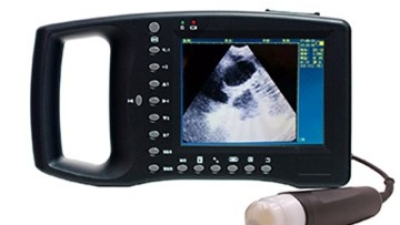
The ECI-1800 Portable Veterinary Ultrasound Scanner is an invaluable tool for veterinarians aiming for accurate pregnancy diagnoses. With its multiple pseudo-colors, the scanner enhances image clarity, allowing practitioners to effectively visualize the anatomy and conditions of the animal in question. This feature is particularly useful during pregnancy assessments, as it enables the detection of pregnancy-related changes that might otherwise go unnoticed.
Designed for convenience and efficiency, the ECI-1800 comes equipped with a large capacity battery that ensures long-lasting performance during fieldwork. This is essential for veterinarians who often work in diverse environments where access to power sources can be limited. Additionally, the sturdy yet lightweight ABS body of the device makes it easy to transport, while the ergonomic handle provides a comfortable grip for prolonged use, minimizing fatigue during examinations. These thoughtful design elements make the ECI-1800 an optimal solution for veterinary professionals looking to improve their diagnostic capabilities on the go.
: Focus on image quality, connectivity options, battery life, charging capabilities, and the ergonomics of the probe to ensure usability and diagnostic quality.
Higher frequencies provide better resolution suited for superficial structures, while lower frequencies penetrate deeper, making them suitable for deeper tissues.
Compatibility with various imaging systems is essential for seamless integration into your practice, allowing efficient connectivity to existing devices.
High-resolution wireless probes enhance spatial resolution and signal-to-noise ratio, improving the detection of small lesions and anatomical details, thus increasing diagnostic accuracy.
Probes with seamless wireless connectivity, advanced image processing algorithms, and real-time imaging capabilities improve the user experience and lead to better patient outcomes.
Consider both the initial purchase price and long-term cost-effectiveness, including maintenance, upgrades, and accessories, while evaluating potential savings from improved workflow and reduced repeat scans.
It includes the initial purchase price, maintenance costs, potential upgrades, and any necessary accessories for optimal performance.
They reduce setup time and enable quicker access to imaging, facilitating faster workflows and improving patient satisfaction.
Some high-resolution wireless probes can achieve spatial resolutions as fine as 0.5 mm, significantly improving diagnostic capabilities.
A lightweight and well-designed probe enhances comfort for both the operator and the patient, improving overall examination efficiency.
When selecting Wireless Ultrasound Probes for your practice, it is essential to consider several key features that directly impact performance and usability. Factors such as image quality and resolution are paramount, as they determine the diagnostic capabilities of the probes. Additionally, understanding compatibility with existing medical equipment ensures seamless integration into current workflows, while evaluating user feedback can provide insights into clinical performance and reliability.
In a comparative analysis of the top 5 Wireless Ultrasound Probes in 2025, budgeting for cost-effectiveness will also play a critical role in decision-making. By engaging with cutting-edge technology, such as that developed by Sichuan Eacenic Science & Technology Group, which focuses on veterinary medical electronics, practitioners can enhance their diagnostic capabilities while remaining mindful of budgetary constraints. The combination of quality and innovation in Wireless Ultrasound Probes is poised to elevate the standards of medical imaging in the veterinary field.