inquiry
Leave Your Message
0%

Picking out a Veterinary Ultrasonic Scalpel isn’t just about comparing prices or power specs. It’s really a decision that impacts how you handle tissues, your view of the surgical site, how long the procedure takes, and how well the patient recovers afterward. In a small-animal surgery setting, the small details matter a lot—like if the handpiece feels too heavy, or if the blade seals unevenly, or if heat starts spreading near sensitive tissues. These little things can completely change the outcome of the surgery.

Dr. David Dycus, a board-certified veterinary surgeon, often reminds us, “Technology should support your surgical judgment, not replace it.” That’s a point I think we should keep front and center when making these choices. The right Veterinary Ultrasonic Scalpel should fit with what your team usually does—whether it’s a straightforward spay or a more complex soft-tissue procedure. You’ll want to think about how fast it cuts, how well it bleeds are controlled, how heat spreads, how smoothly it vibrates, how comfy the handpiece feels, and whether the blades come in the right sizes. And let’s not forget—evidence and real hands-on experience really matter here.

Remember, the generator is just one piece of the puzzle.

Your team should also consider things like training support, how easy it is to clean and maintain, warranty details, and what safety data is published. Sometimes a budget-friendly system seems like a smart buy but ends up causing delays—thanks to unreliable accessories—or costs hidden in the long run. That’s an important point to think about. No device is foolproof, and how the surgeon uses it still makes a big difference. The most powerful machine isn’t always the best choice. More often, it’s about finding a system that offers controlled activation, good visibility, reliable sealing, and reliable support during tricky cases. This guide is all about helping you weigh those factors using professional judgment, realistic expectations, and, of course, putting patient safety first.
How to Choose a Veterinary Ultrasonic Scalpel?

What a Veterinary Ultrasonic Scalpel Is and How It Works

How to Choose a Veterinary Ultrasonic Scalpel?

An Ultrasonic Scalpel converts electrical energy into high-frequency mechanical vibration. The active blade usually vibrates between 20,000 and 60,000 cycles per second. This motion separates tissue while protein denaturation supports vessel sealing. Heat remains localized, unlike some conventional electrosurgical methods. Less smoke can improve visibility around delicate anatomy.

The device is useful in ovariohysterectomy, tumor excision, and soft-tissue dissection. Yet, it is not automatically safer. Blade pressure, tissue thickness, activation time, and cooling intervals affect thermal spread. The FDA describes ultrasonic surgical systems as devices that cut or coagulate through mechanical vibration. Veterinary evidence remains smaller than human surgical evidence. A 2022 review in Veterinary Surgery reported potential reductions in bleeding and operative time, but outcomes varied by procedure and operator. The evidence is not perfect.

AVMA’s 2024 Pet Ownership and Demographics Sourcebook reports about 59.8 million U.S. households owned dogs, while 42.2 million owned cats. That large caseload includes tiny vessels, thick fascia, and fragile geriatric tissue. Selection should therefore include adjustable power, clear activation feedback, compatible blade sizes, and easy cleaning. Ergonomics matter during a long abdominal procedure. A lighter handpiece may reduce fatigue. Do not ignore training. A clean-looking incision can still hide thermal injury. Real-world evaluation should include seal reliability, tissue sticking, maintenance records, and surgeon learning time. Performance claims need independent verification.

Key Surgical Applications in Veterinary Practice

Choosing a Veterinary Ultrasonic Scalpel for Real Surgical Needs

A veterinary ultrasonic scalpel should match the procedures your team performs most often. In ovariohysterectomy, it can dissect tissue and seal small vessels with limited smoke. During splenectomy, controlled energy may improve visibility around fragile vascular branches. Surgeons may also use it for liver biopsies, mass removal, and selected dental or soft-tissue procedures. Each application demands careful settings and steady instrument handling.

Patient size matters. A device suitable for a large dog may feel excessive in a rabbit or cat. Check the jaw size, active blade length, tissue thickness range, and generator controls before purchase. In a deep abdominal field, a longer shaft can reduce awkward wrist angles. For delicate facial surgery, a narrower working end may provide better control. Ask whether the system supports reusable or single-use components, then calculate cleaning time and operating costs.

Energy devices are not automatic substitutes for surgical judgment. A vessel can appear sealed but bleed after traction or movement. Always inspect the seal, especially near major vessels, bowel, or thin feline tissue. Training should include live tissue practice, dry handling drills, and emergency ligation skills. A common mistake is choosing the most powerful unit. The better question is whether the team can use its modes consistently, document complications, and recognize when conventional instruments are safer.

How to Match Scalpel Features With Animal Size and Procedure Type

When choosing a veterinary ultrasonic scalpel, match the handpiece and blade to the animal’s anatomy. A 3–5 kg cat needs a slim, precise tip and controlled energy delivery. Excessive power can char thin tissue and obscure small vessels. Larger dogs may require stronger jaws and a wider sealing capacity. For horses or large-breed surgery, check the maximum vessel diameter and cooling performance carefully.

Procedure type matters as much as body size. Ovariohysterectomy often benefits from reliable vessel sealing and reduced instrument exchanges. Liver biopsy requires delicate dissection, limited thermal spread, and excellent visibility.

A compact handpiece may improve control in confined areas, while a stronger model suits thicker tissue. Do not judge quality by wattage alone. A higher setting is not automatically better.

The 2020 AAHA Anesthesia and Monitoring Guidelines cite peri-anesthetic mortality of about 0.05% in healthy dogs and 0.11% in healthy cats, based on data from 98,036 dogs and 79,178 cats (Brodbelt et al., Veterinary Anaesthesia and Analgesia, 2008). These figures reinforce careful patient selection, monitoring, and energy control. A neat specification sheet can still mislead. Test the instrument on comparable tissue first. Evidence is not perfectly uniform, and operator experience changes outcomes. Fit matters. Don’t guess.

Important Performance Factors: Power, Precision, and Heat Control

Choosing a Vet Ultrasonic Scalpel requires more than comparing wattage. Power is not everything. A useful system should deliver stable energy through thin vessels and dense connective tissue. Adjustable power helps surgeons match output to tissue thickness, rather than using maximum energy by habit. In practice, a 2 mm vessel may need a different setting from a broad, wet tissue bundle. A 2022 review in Veterinary Surgery reported that ultrasonic instruments generally produce limited lateral thermal spread, often within approximately 1–3 mm. The exact result changes with activation time, tissue moisture, and jaw pressure.

Precision depends on blade geometry, tactile feedback, and consistent vibration. Look for controlled activation, a narrow working profile, and clear visibility around the target tissue. Published comparative studies in veterinary and human surgery have associated ultrasonic dissection with reduced smoke and less collateral heat than conventional electrosurgery in several procedures. Still, those findings are not universal. Heat matters. A 2021 systematic review in Surgical Endoscopy noted that thermal injury risk rises with prolonged activation and repeated contact. That warning deserves attention in small patients, where a few millimeters can affect vital structures. I would test the device on representative tissue before clinical use. Bench performance can look excellent, yet real tissue is less tidy. A useful evaluation records sealing time, tissue sticking, visible charring, and temperature near the incision. Some overlooked details matter more than impressive power ratings.

Evaluating Handpieces, Blades, and System Compatibility

Choosing a veterinary ultrasonic scalpel starts with the handpiece, not the price tag. The grip should remain stable during long procedures, even with gloved, wet hands. Check its weight, trigger position, cable flexibility, and cleaning method. A narrow handpiece may improve access around feline jaws or small abdominal structures. However, very light designs can feel less balanced. That detail is easy to underestimate.

Blade selection must match tissue thickness, vessel size, and the procedure’s working angle. Ask for verified activation times, heat control data, and expected blade durability. A 2022 review in Veterinary Surgery reported that ultrasonic devices can limit lateral thermal injury compared with conventional electrosurgery, but results vary with power, pressure, and activation time. Technique still matters. It is not magic. Grand View Research’s 2024 veterinary surgical instruments report projects mid-single-digit market growth through 2030, reflecting wider adoption of advanced operating-room tools. Growth does not guarantee clinical value.

System compatibility deserves a written checklist. Confirm connector design, generator frequency, software settings, blade recognition, and sterilization instructions. A handpiece may connect physically yet operate outside its validated parameters. That creates avoidable uncertainty. AAHA’s anesthesia and monitoring guidelines stress equipment checks before every procedure, and the same discipline should apply here. Request documented compatibility from the manufacturer, not a sales assumption. I would also test the complete setup on a practice model before surgery. Real-world handling can expose problems that specifications miss.

Safety, Sterilization, and Ergonomic Considerations

Choosing a veterinary Ultrasonic Scalpel System requires more than comparing cutting speed. Safety should guide every decision. Look for stable energy delivery, visible activation indicators, and automatic alerts for overheating or connection faults. The handpiece should remain cool during repeated procedures. Tissue feedback matters, especially near delicate vessels, nerves, or thin intestinal walls. A controlled sound and minimal vibration can help the surgeon notice changes earlier.

Sterilization deserves equal attention. Confirm that the handpiece, blade, and cable tolerate the clinic’s validated sterilization process. Follow the manufacturer’s instructions for cleaning, temperature, exposure time, and drying. Residue inside a narrow joint may survive an apparently complete cycle. Inspect seals, insulation, and blade attachments under bright light before use. If a component looks damaged, remove it from service. Small shortcuts create large risks. Reusable parts should have clear tracking records and defined replacement limits.

Ergonomics affects safety too. The handle should fit a gloved hand without forcing the thumb or wrist into an awkward angle. A balanced instrument reduces fatigue during long abdominal or orthopedic procedures. Check cable flexibility, foot-pedal placement, and access to activation controls. A heavy handpiece may feel acceptable for five minutes, then become tiring. I would test it with the intended gloves and surgical posture, not in a showroom grip. Training also matters. Even an excellent system can perform poorly when users misunderstand activation time, tissue pressure, or cleaning requirements. One detail is easy to miss: staff should rehearse the complete workflow before the first live case.

Comparing Costs, Maintenance, and Supplier Support

Choosing an Ultrasonic Surgical Scalpel requires more than comparing purchase prices. Grand View Research’s 2024 veterinary surgical instruments analysis forecasts market growth above 6% annually. That growth may increase supplier options, but not every system offers equal service value. A lower quote can hide costly handpiece repairs, disposable blade fees, and staff training time.

Maintenance deserves close attention. Ask for the recommended inspection interval, sterilization limits, repair turnaround, and loaner policy. The U.S. Bureau of Labor Statistics reported median annual pay of about $43,000 for veterinary technologists and technicians in 2023. Therefore, repeated troubleshooting can quickly become an operating expense. Supplier support should include documented training, readable error codes, local technical assistance, and parts availability. I once saw a clinic choose a cheaper unit, then wait weeks for a compatible handpiece. The saving disappeared.

Tips: Request a three-year total-cost estimate. Include the generator, handpiece, blades, servicing, shipping, and training. Compare warranty exclusions carefully. Ask whether staff competency records are provided. Check cleaning instructions before purchase. A supplier that answers slowly before the sale may respond even slower afterward. Also, review your own procedure volume honestly; occasional use may not justify premium features. More expensive is not always better.

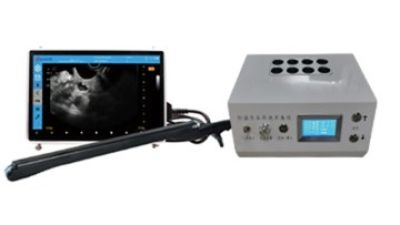
ECI-X7H Veterinary Ultrasound Machine with OPU Probe: Features, Benefits, and Buying Guide

The ECI-X7H Veterinary Ultrasound Machine with OPU Probe is designed to support accurate and efficient reproductive examinations in veterinary practice. Its 256-crystal array and 96-channel color Doppler technology provide clear, detailed images for evaluating follicles, pregnancy status, blood flow, and other reproductive conditions. The OPU probe is especially useful for ovum pick-up procedures, helping professionals work with greater precision and confidence during routine and advanced procedures.

A 10.1-inch HD touchscreen offers an intuitive interface, allowing users to adjust imaging settings and review results with minimal effort. The compact, practical design makes the system suitable for clinics, breeding centers, and mobile veterinary services. It also includes vacuum pump accessories, including a wireless foot pedal, power supply, power cable, and tubing, helping simplify installation and daily operation.

When choosing an ultrasound machine for OPU work, buyers should consider image quality, probe compatibility, Doppler performance, operating convenience, and the availability of essential accessories. As a direct-from-factory supplier in China, we provide equipment built for demanding veterinary environments while offering dependable performance and strong value. Contact our team to discuss configuration options, application requirements, and delivery support.

FAQS

: How should blade size match the animal?

: Match the blade to anatomy, tissue thickness, and vessel size. A 3–5 kg cat usually needs a slim, precise tip. Larger dogs may need stronger jaws and wider sealing capacity. Fit matters.

Does a higher power setting produce better results?

No. Higher power may char thin tissue and hide small vessels. Use controlled energy for delicate structures. Do not judge quality by wattage alone. More power is not automatically better.

Which features matter during ovariohysterectomy?

Reliable vessel sealing can reduce instrument exchanges. Choose a blade that matches vessel diameter and tissue thickness. A stable handpiece may improve control around abdominal structures. Test comparable tissue beforehand.

What should surgeons consider during liver biopsy?

Liver biopsy needs delicate dissection, limited thermal spread, and clear visibility. A compact handpiece may improve access in confined areas. Use careful pressure and shorter activation periods near fragile tissue. Results can vary.

How should the handpiece be evaluated?

Check grip stability, weight, trigger position, cable flexibility, and cleaning requirements. Test it with wet gloves and the intended surgical posture. A very light design may feel poorly balanced. That detail is easy to miss.

How can users confirm system compatibility?

Request written confirmation for connectors, generator frequency, software settings, and blade recognition. Also verify sterilization instructions and validated operating parameters. Physical connection does not prove safe compatibility. Do not guess.

What safety features deserve attention?

Look for stable energy delivery, visible activation indicators, and overheating alerts. Connection-fault warnings are useful during busy procedures. The handpiece should remain reasonably cool during repeated activations. Small warnings matter.

What sterilization checks are necessary?

Confirm that the handpiece, blade, and cable tolerate the clinic’s validated process. Follow approved cleaning temperatures, exposure times, and drying steps. Inspect joints, insulation, seals, and attachments under bright light. Residue may remain.

How does ergonomics affect surgical safety?

A balanced handle can reduce wrist and thumb strain during long procedures. Check cable movement, foot-pedal placement, and activation access. Five minutes of comfort proves very little. Fatigue changes technique.

What training should staff complete before clinical use?

Staff should rehearse activation timing, tissue pressure, cleaning, and the complete setup. Practice on a comparable model before the first live procedure. Experience changes outcomes. Specifications can mislead.

Conclusion

Choosing the right Veterinary Ultrasonic Scalpel requires a clear understanding of how ultrasonic energy cuts tissue and controls bleeding through vibration and localized heat. Its applications may include soft-tissue dissection, vessel sealing, and procedures requiring reduced mechanical trauma. Selection should reflect the animal’s size, tissue characteristics, and surgical method. Smaller patients and delicate procedures may require finer blades, lower power, and greater precision, while larger animals or tougher tissues may need stronger output and more robust components.

Important evaluation factors include consistent power delivery, effective heat control, cutting accuracy, and minimal collateral tissue damage. The handpiece and blades should be comfortable to use, compatible with the main system, and suitable for the intended sterilization process. Surgeons should also consider grip design, operating fatigue, cleaning requirements, service life, maintenance procedures, and access to technical support. A well-matched system can improve workflow, safety, and procedural confidence while providing practical long-term value for veterinary facilities.


Lila

Lila

Lila is a dedicated marketing professional at Sichuan Eacenic Science & Technology Group Co., Ltd., a company established in 2009 that specializes in the design, manufacture, and sales of veterinary medical electronics and integrated circuits. With a strong focus on research and development, Lila......
Previous Top 5 Ultrasonic Harmonic Scalpel Transducer Benefits?