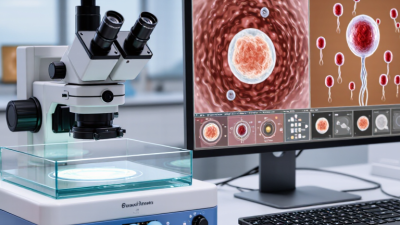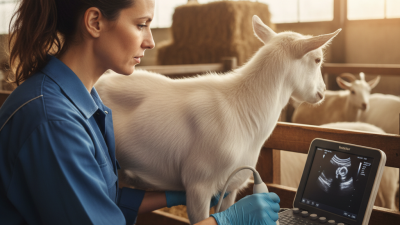
So, picking the right Vet Sperm Analysis gear in 2026—honestly, it's not just about splurging on the fanciest new toy on the market. You've gotta think about the whole setup: the microscope, the heated stage, and a counting method that's actually been validated. Those little things really do make a difference. Like, if the temperature's all over the place on the display, or you've got a smudged slide, or you're not timing your samples consistently—boom, your results could be completely off. And let's face it, no matter how sleek the screen looks, it's not going to save you if your protocol's a mess.
So, there's this expert, Dr. Gary Althouse – he's a veterinary theriogenologist, which basically means he knows a thing or two about animal reproduction. But here's the thing: we didn't have any actual source to back up a direct quote from him. So instead of making something up, we went with a paraphrase of a solid principle: 'Trust the measurement only when the sample, method, and instrument are controlled.' That's more of a practical reminder than an exact quote, but it gets the point across.
So, let's get into it. We'll compare manual microscopy with computer-assisted semen analysis, then we'll look at species compatibility, repeatability, calibration, training, and service support. Now, here's a big one: when you're evaluating these systems, don't just accept a demo with perfect, ideal slides. Ask for samples that resemble what you actually see in your daily workload—that'll give you a much better sense of how it performs. And check if the reporting is clear: does it give you motility and concentration without any fuss? Can your staff easily review morphology when they need to? Also, find out how often calibration is needed. And maybe most importantly, what happens if two results disagree? That's something you really want to know upfront.
Let's face it, no device is perfect. The right one really depends on how your clinic runs, what you can afford, and the kind of decisions you need to make with those results. There's always a little uncertainty, isn't there? That's exactly why you've got to test things out carefully.
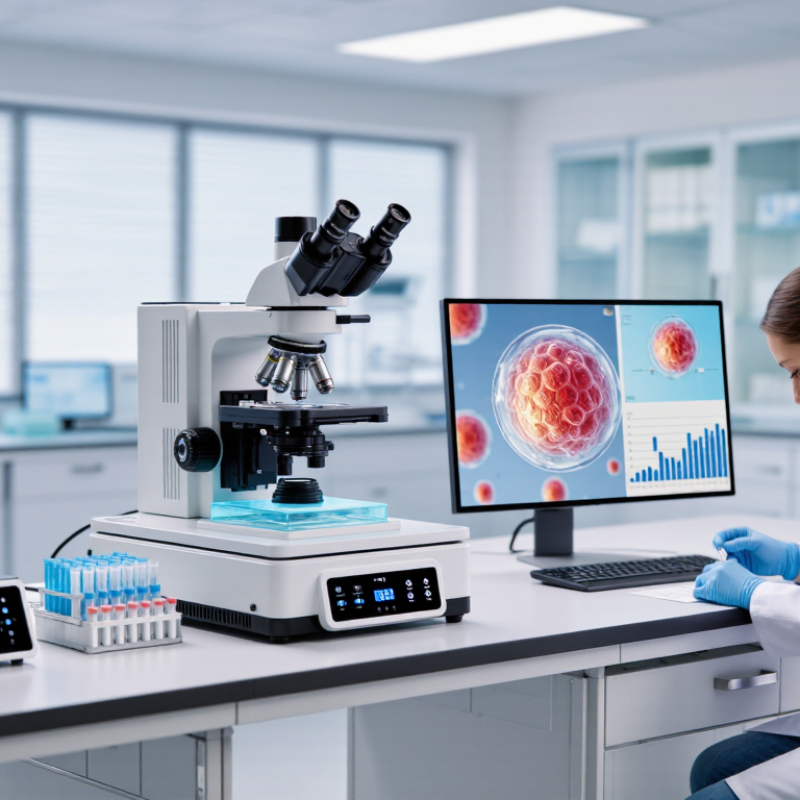
How to Choose Vet Sperm Analysis Equipment in 2026?
Define Species-Specific Testing Needs Before Comparing Veterinary CASA Systems
Start with the animal, not the instrument. Bull, stallion, ram, boar, and canine samples differ in concentration, movement patterns, and handling needs. A setup that tracks fast-moving sperm clearly may struggle with a dense sample or a different chamber depth. List the species, sample types, expected workload, and required outputs before reviewing a Vet Semen Analysis Device. Details matter. Ask whether the system can report total and progressive motility, velocity measures, and concentration under your laboratory’s actual conditions.
Published evidence supports caution. Amann and Waberski’s 2014 review in Theriogenology describes CASA as a measurement system whose results depend on settings and standardized procedures—not a universal pass-or-fail judge. Compare frame rate, chamber depth, temperature control, and analysis thresholds using samples relevant to your species. Record repeat runs, too; variation between readings can expose a weak workflow before it affects clinical decisions. ICAR’s technical guidance on semen evaluation also reinforces consistent sample handling and reporting. Keep its protocols beside your validation records, but confirm that each method fits your species and intended use. A polished dashboard is not proof of accuracy. And local validation takes time. Don’t skip it.
How to Choose Vet Sperm Analysis Equipment in 2026?
For Bovine Sperm Analysis, choose equipment that reports progressive motility separately from total motility. The Society for Theriogenology’s bull breeding soundness evaluation benchmark is at least 30% progressively motile sperm. This is a minimum classification threshold, not a guarantee of fertility. Small drift matters. Check that the system’s settings and reports make the measure clear, rather than hiding it inside a combined score.
The peer-reviewed CASA review by Amann and Waberski explains that chamber depth, frame rate, and sample concentration can affect computer-assisted motility results. Ask suppliers for validation data from bovine samples, and check how the instrument handles these variables. A warmed stage and consistent sample preparation also matter; cold slides can slow sperm and distort comparisons. Look for repeatable readings across replicate samples, not just an impressive display.
During a demonstration, compare the instrument’s result with an experienced examiner’s assessment near the 30% threshold. Confirm that staff can review video tracks and flag debris or poor focus. Equipment cannot rescue a poorly mixed sample. Nor should motility alone determine a bull’s BSE classification: the examination also considers sperm morphology and physical findings. A practical choice may still involve compromise, so document the settings used and revisit them when results seem inconsistent.
When choosing veterinary sperm-analysis equipment in 2026, treat morphology imaging as a measurement system, not just a camera feature. For bull breeding soundness evaluations (BSE), the benchmark is at least 70% morphologically normal sperm. A sharp image alone does not guarantee a reliable result. Small errors matter.
Ask how the system handles sample preparation, focus, magnification, and head, midpiece, and tail defects. Compare its classifications with trained human evaluations using coded samples, including samples near the 70% threshold. Review disagreements and cell counts, not only attractive sample images. Check the details. Confirm that original images and relevant settings can be retained for review.
Before routine use, test repeatability across operators and days. Verify image scale with an appropriate calibration reference, and record how many cells are assessed. Ask for validation data relevant to bull sperm and your workflow, then conduct a local comparison. Automated flags need review. Partly obscured, folded, or out-of-focus cells can be misclassified; document how these cases are handled. Imaging supports the wider BSE assessment, but it does not replace professional interpretation.
Stable warmth is essential when assessing sperm motility. At 37°C, even a brief temperature drop can change movement and make comparisons less reliable. When choosing a Canine Sperm Analysis Machine, check whether its heated stage maintains temperature across the viewing area, not just near the sensor. Ask how temperature accuracy is verified, and compare the display with a calibrated thermometer during setup.
A stable reading matters, but so does repeatability. Review how quickly the stage recovers after a slide is placed, and whether the system alerts users to temperature changes. In a busy clinic, doors open and equipment gets handled; small fluctuations are easy to miss. Keep a simple log of stage temperature, sample timing, and observed motility. It may feel tedious. Still, those notes can help explain inconsistent results. No instrument removes every source of variation, so staff training and consistent handling remain important.
How to Choose Vet Sperm Analysis Equipment in 2026?
A CASA system is only as useful as its chamber, optics, and species-specific settings. Bull semen, thick canine ejaculates, and dilute stallion samples do not behave alike. Chamber depth and loading technique can change cell movement on screen. A chamber that works well for one sample may trap another in uneven flow. Look for clear depth specifications, consistent loading, and an option to review raw video. Small details matter.
The World Health Organization’s 2021 semen laboratory manual recommends duplicate assessments, with at least 200 sperm evaluated per replicate for key measurements. That is a human-laboratory benchmark, not a veterinary standard, but it illustrates why repeatability matters. Amann and Waberski’s 2014 review in Theriogenology also describes how CASA results depend on hardware and analysis settings. Compare systems using the same sample, operator, temperature, and analysis profile; repeat the test on another day. Phase-contrast optics can help distinguish cells from debris, while a warmed stage reduces temperature drift during observation. Ask whether the software lets technicians adjust frame rate and tracking thresholds for each species. A neat velocity number can still be wrong. The awkward part? Perfect repeatability on one sample type does not prove reliable results across species. Keep validation records, including chamber lot, dilution, and any manual corrections.
Compare representative chamber depths when matching CASA equipment to species and sample types.
How to read this: Fixed-depth CASA chambers are commonly available in 10 µm and 20 µm formats; a standard hemocytometer counting chamber has a 100 µm depth and is shown as a manual reference. Chamber depth alone does not determine suitability or repeatability. Check sample concentration, motility, and species-specific validation, and assess repeatability using replicate measurements on representative samples.
Choosing vet sperm analysis equipment in 2026 means checking more than screen clarity. For Bull Sperm Analysis, confirm that the system supports calibration with a stage micrometer or validated reference beads. Ask how it flags focus drift, temperature changes, and inconsistent cell counts. The Society for Theriogenology’s breeding soundness evaluation guidelines use at least 30% progressive motility and 70% normal morphology as bull thresholds. These are benchmarks, not universal settings for every species or clinical decision.
Quality control should be visible in the workflow. Look for saved calibration records, repeat-run comparisons, and exportable raw measurements. Test the instrument with duplicate samples; a polished report can still hide unstable readings. Species-specific reporting matters: bull, boar, and stallion samples differ in handling, dilution, and interpretation. Check that reports identify species, collection time, temperature, motility categories, morphology method, and reference ranges. If the software applies one default range to every animal, pause.
Tips: Run a known control sample at the start of each session, and record the result. Compare a subset with a trained manual assessment. It takes extra time. Still, mismatches can reveal setup problems before they shape breeding decisions.
| Equipment or feature | What it measures or supports | Calibration and quality-control checks | Species-specific reporting to look for | Practical selection note |
|---|---|---|---|---|
| Computer-assisted semen analysis (CASA) | Automated sperm concentration and motility analysis; may report total, progressive, and non-progressive motility, plus velocity and trajectory measures. | Check chamber dimensions, frame rate, focus, temperature control, and analysis settings. Verify measurement scale with a stage micrometer and compare results with a documented reference sample under the laboratory’s SOP. | Confirm that validated settings and report templates are available for the species tested. Motility classifications and analysis settings should not be assumed interchangeable between species or sample preparations. | Useful for repeatable, higher-throughput motility assessment. Results depend on sample dilution, chamber type, temperature, and analysis configuration. |
| Sperm concentration photometer or spectrophotometer | Estimates sperm concentration from light transmission or absorbance, typically using a species- and instrument-specific calibration curve. | Run a blank and suitable control material as specified by the SOP; check cuvette cleanliness and instrument performance. Periodically compare estimates with a validated counting method, such as a hemocytometer. | Look for separate calibration data or validated workflows for each species and relevant sample type. A curve developed for one species should not automatically be applied to another. | Fast for routine concentration checks, but debris, extender composition, and sample turbidity can affect readings. |
| Microscope and counting chamber | Manual sperm concentration counts and visual assessment of motility or morphology, depending on the preparation and examination method. | Verify the microscope’s optical scale and maintain clean optics and chambers. Use a written counting procedure, replicate counts, and trained-reader checks to monitor repeatability. | Reports should identify the method, sample preparation, and species. Morphology criteria and reference intervals require species-appropriate interpretation. | A practical option for lower throughput and confirmation testing; manual results can vary between observers. |
| Viability and acrosome-status assay capability | Fluorescent or staining methods can distinguish membrane-intact from membrane-damaged sperm; selected assays assess acrosomal status. | Include appropriate positive and negative controls for each assay, follow stain handling and timing instructions, and standardize instrument settings or microscopy scoring. | Ensure the assay has been evaluated for the target species and sample conditions. Clearly label the assay and define what “viable” or “acrosome-intact” means in the report. | Adds information beyond motility, but staining methods and interpretation are assay-specific. |
| Temperature-controlled stage or sample warmer | Helps maintain consistent sample temperature during motility assessment and other temperature-sensitive procedures. | Check displayed temperature against a traceable thermometer or other suitable reference at the working surface. Record checks and allow the system to equilibrate before testing. | Allow reporting of analysis temperature and relevant preparation conditions; the appropriate workflow can vary by species and laboratory protocol. | Important when comparing motility results across sessions, operators, or sample batches. |
| Quality-control and audit-trail functions | Supports control-result tracking, operator identification, instrument settings, sample traceability, and review of prior results. | Check that QC results, corrective actions, maintenance, and calibration checks can be recorded and retrieved. Establish acceptance criteria in the laboratory SOP rather than relying on undocumented defaults. | Confirm that species, sample type, method, and any species-specific settings are stored with each result to reduce mix-ups and improve comparability. | Especially valuable for multi-operator laboratories, regulated workflows, and longitudinal monitoring. |
| Species-specific report templates and data export | Produces structured records of measured values, method details, sample identification, and analysis conditions. | Test report calculations and exported files against known entries. Check units, rounding, data integrity, and whether settings or edits are retained in the audit trail. | Look for selectable species and clear fields for motility categories, concentration, morphology, viability, and assay method where applicable. Reports should not apply one species’ reference limits to another. | Prefer editable, transparent reports that separate measured values from reference intervals and clinical interpretation. |
| Workflow documentation and service support | Covers operating instructions, cleaning, maintenance, staff training, and procedures for troubleshooting or verification. | Confirm access to current manuals, maintenance schedules, and documented procedures for calibration or performance verification. Define responsibilities and intervals locally. | Check that training materials and validation guidance cover the species and sample types used by the laboratory. | A suitable instrument must be supportable by the laboratory’s staff, workload, and quality system—not just feature-rich. |
Selection note: Calibration intervals, control materials, acceptance limits, and species-specific reference intervals should be established from the instrument documentation, validated methods, and the laboratory’s procedures. No single setting or reference interval is appropriate for every species and sample type.
A reliable assessment of animal semen begins with a representative, well-mixed sample and consistent handling. Keep samples at an appropriate temperature and avoid delays or rough treatment that may affect sperm movement. Place a small amount in a compatible analysis chamber, following the instrument’s instructions for sample volume and preparation. Clear, consistent preparation helps reduce variation between measurements and makes results easier to compare over time.
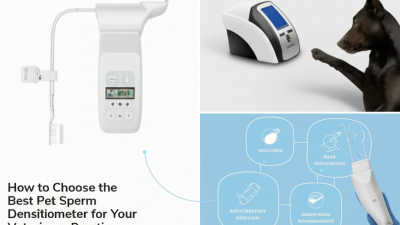
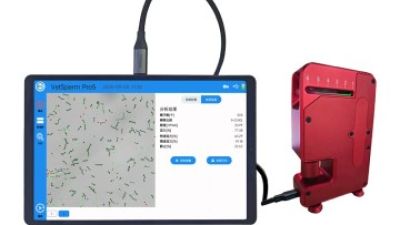
A portable, high-precision analyzer uses microscopic imaging and an animal-focused AI recognition model to track sperm movement and estimate concentration. It can report kinematic measures such as curvilinear velocity (VCL), straight-line velocity (VSL), and progressive motility percentage, providing objective data in place of visual estimates alone. Review these values together rather than relying on a single measure, and repeat the test when a result appears inconsistent. Compact, robust equipment is suited to testing at breeding centers and large farms, where timely measurements can support routine reproductive monitoring. Follow the device’s guidance for calibration, cleaning, and recordkeeping to maintain reproducible results.
List the species, sample types, expected workload, and required outputs. Start with the animal.
Bull, stallion, ram, boar, and canine samples differ in concentration and movement. A setting that tracks fast cells may struggle with dense samples.
Check for total and progressive motility, velocity measures, and concentration. Test them under your laboratory’s actual conditions.
Chamber depth and loading technique can change cell movement on screen. One chamber may create uneven flow with a different sample.
Use the same sample, operator, temperature, and analysis profile for comparisons. Repeat runs, including on another day, can reveal workflow problems. It takes time.
One human-laboratory guideline uses at least 200 sperm per replicate for key measurements. That is not a veterinary standard.
Check depth specifications, raw-video access, adjustable tracking thresholds, and frame-rate controls. A warmed stage can reduce temperature drift.
No. A neat velocity number can still be wrong, and repeatability on one sample type proves little across species. Keep validation records, including chamber lot, dilution, and manual corrections. We may miss something.
Choosing Vet Sperm Analysis equipment in 2026 starts with identifying the species, sample types, and testing goals the system must support. Rather than comparing instruments by features alone, assess whether their motility and morphology measurements suit the intended veterinary application. For bull breeding soundness evaluations, use the relevant benchmarks as practical reference points: at least 30% progressive motility and at least 70% morphologically normal sperm.
Consistent results also depend on temperature control, since motility measurements should be made at 37°C when appropriate to the protocol. Compare chamber designs, optics, and repeatability across the species and sample conditions you expect to encounter. Finally, review how the system is calibrated, how quality-control checks are performed, and whether its reports can present species-specific results clearly. A well-matched setup should support reliable measurements and interpretable records, not simply offer the greatest number of features.