
 Bovine
 Equine
 Swine
 Ovine
 Pet






How to Select Veterinary Ultrasound Probes?
The veterinary ultrasound probe(transducer) is the device that emits and receives ultrasound waves, which are then converted into images by your machine. The vet Ultrasound Machine Probes may be placed against the animal's skin or carefully inserted into the rectum. The probe employs crystals with ‘piezoelectric’ properties to generate ultrasonic waves, which are then focused by the probe's “lens” towards the desired direction. The reflected energy is converted into electrical current, transmitted along wires back to the ‘machine’ for processing and display.
There exists different ultrasound probes, each possessing unique advantages that should be selected according to the intended application. Five commonly used probes are employed for experiments involving small, large, and rare animals. Their primary distinctions lie in their dimensions, shape, and the frequency at which they emit ultrasound.
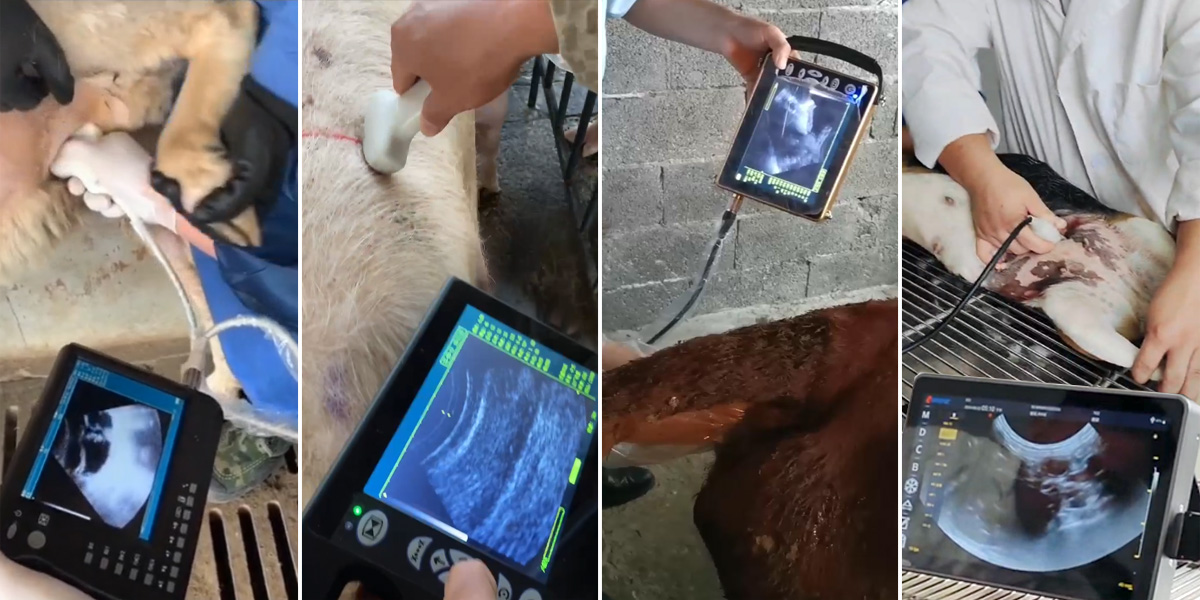
The frequency of ultrasound machine probes (i.e., the number of waves emitted per second) is crucial as it directly influences what we can visualise and the clarity of the images. At lower frequencies, scanning depth increases, allowing us to penetrate deeper into the animal's body to obtain necessary images, though image quality diminishes. At higher frequencies, scanning depth is shallower, resulting in superior image quality.
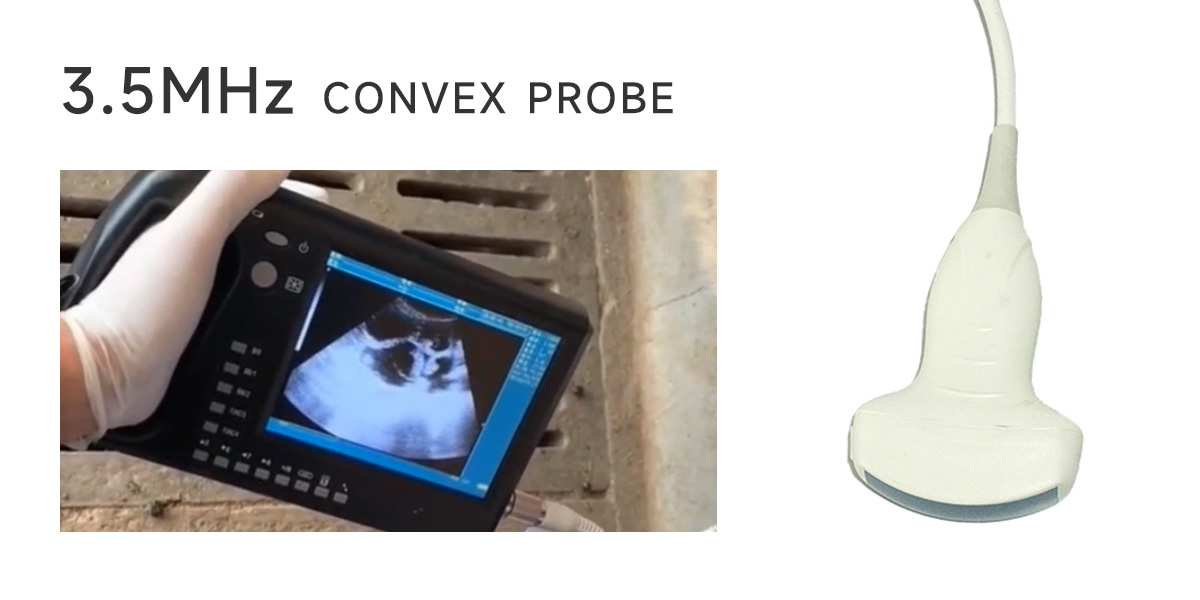
The convex probe features a relatively large contact area with the skin. This enables a greater volume of internal tissue to be visualised simultaneously during scanning. Operating at the 3.5MHz frequency, 3.5MHz ultrasound probe offers superior penetration capabilities, albeit at the expense of lower resolution. Consequently, it is well-suited for use on larger animals such as large breeds of dog, sheep, goats, and pigs.
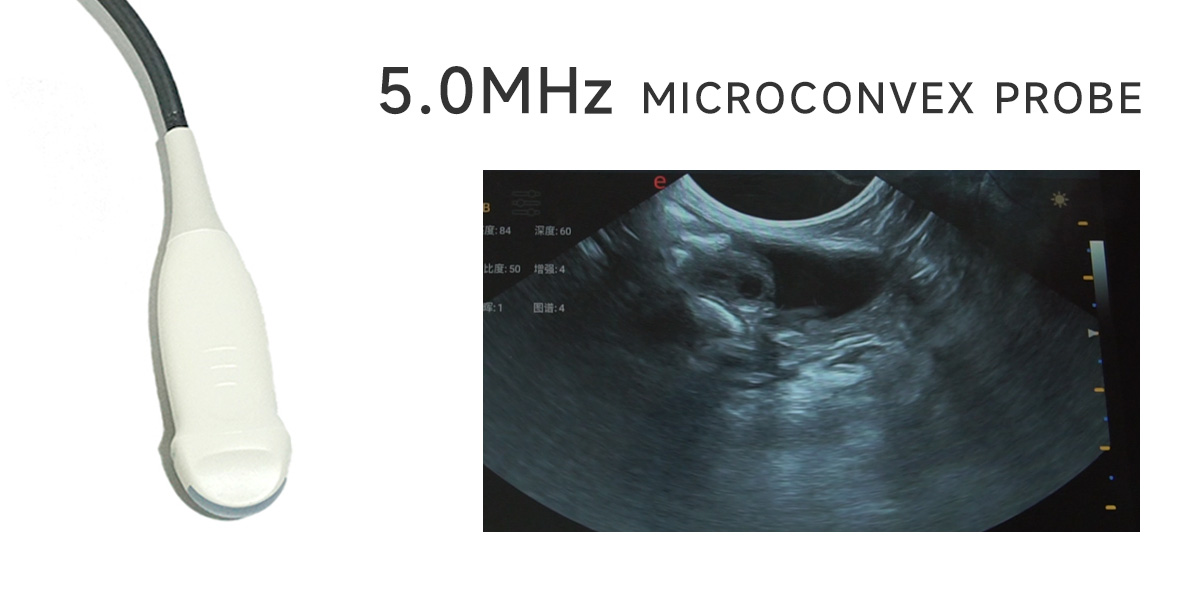
Microconvex Probe is smaller than convex probe. As microconvex probe operates at a slightly higher frequency than convex probe, their penetration capability is somewhat reduced, making them less suitable for larger animals. However, compared to convex probe, micro-convex probe offer several advantages: the 5.0MHz frequency enables superior image quality, while their compact size enhances manoeuvrability. Given these characteristics, it is more suitable for smaller animals, such as cats, dogs, and other pets.
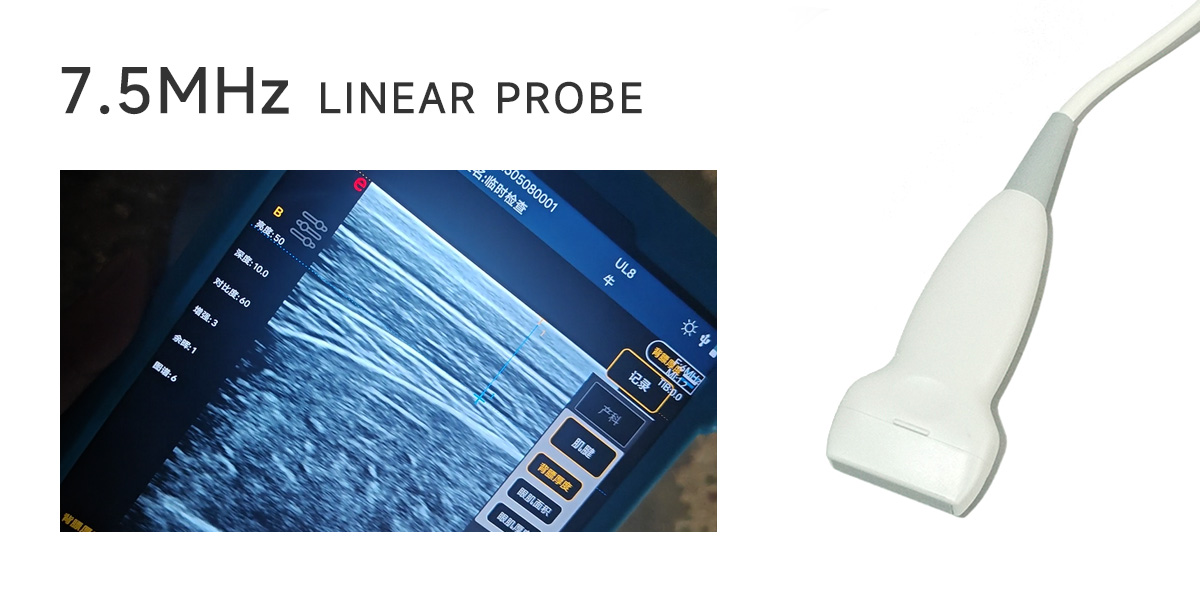
Linear probe is suitable for high-quality scanning close to the body surface. Operating at a frequency of 7.5MHz, they are particularly well-suited for tendon scanning and abdominal scanning in dogs and cats.
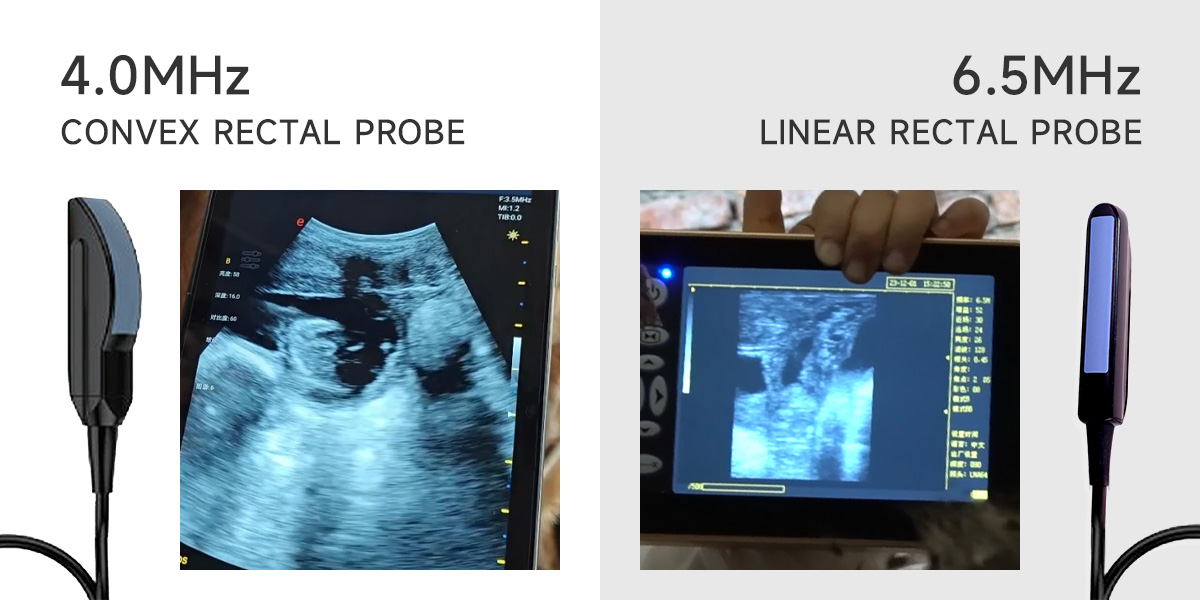
Rectal ultrasound probes comprise two types: linear rectal probe and convex rectal probe, specifically designed for internal rectal scanning in large animals such as cattle, horses, and donkeys. During use, Rectal Ultrasound Probe must be inserted into the animal's rectum for scanning. The linear rectal probe operates at 6.5 MHz frequency, offering relatively superior image quality and is best suited for operators proficient in veterinary ultrasound scanner. The convex rectal probe functions at 4.0 MHz; its broader scanning range makes it more suitable for novice users. It is commonly employed for pregnancy scans and reproductive system examinations in large animals such as cattle and horses.
Sector probe ultrasound utilise a motor-driven single piezoelectric crystal to scan and emit a sector-shaped ultrasonic beam array, resulting in relatively high energy dissipation. Following prolonged use, oil within the sector probe ultrasound may partially evaporate, forming bubbles. These bubbles subsequently cause blurred imaging during operation. Therefore, when bubbles appear, it is necessary to manually add castor oil to eliminate them. Additionally, during winter usage, sector probe ultrasound should be preheated for several minutes beforehand.
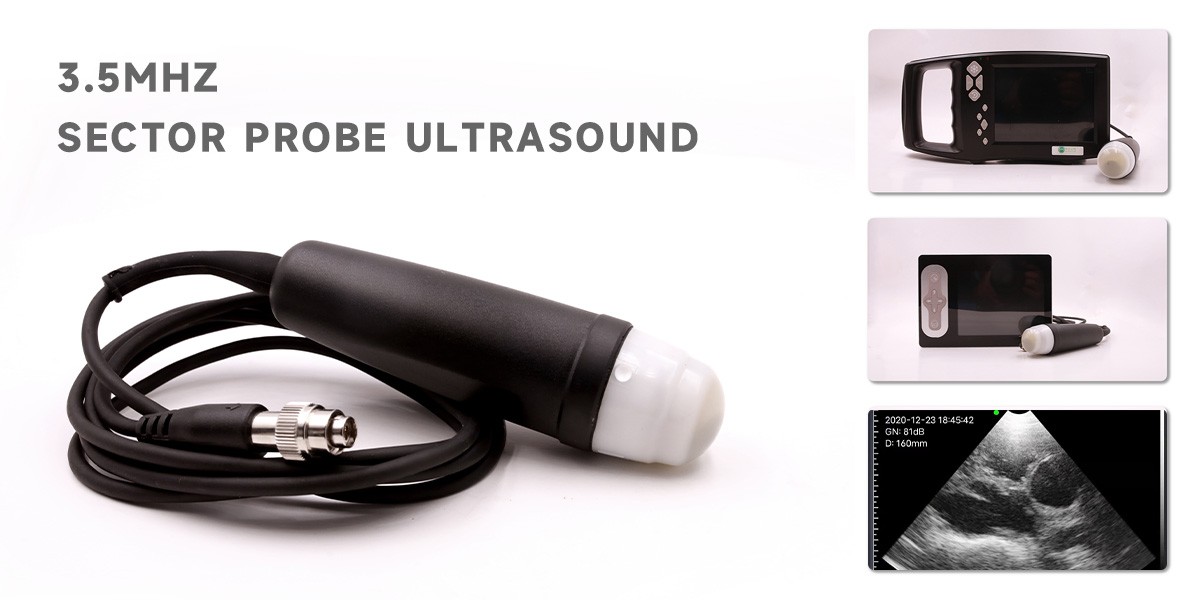
This sector probe ultrasound operates at a frequency of 3.5 MHz and is specifically designed for external animal use. It offers greater scanning depth, making it suitable for applications such as pregnancy detection in pigs and sheep. Compared to electronic probes, mechanical probes are more cost-effective. Consequently, if your budget is limited and you require only pregnancy detection for pigs and sheep, sector probe ultrasound represents a suitable choice.
ECI offers a range of ultrasound probes suitable for various animals, meeting diagnostic requirements across species. For further details, please contact us. WhatsApp: +86 17761201308/ E-mail: sales002@eacenic.com