
 Bovine
 Equine
 Swine
 Ovine
 Pet





Wireless Veterinary Ultrasound: How ECI Group Is Changing the Way Veterinarians Work
What Makes Wireless Ultrasound Different
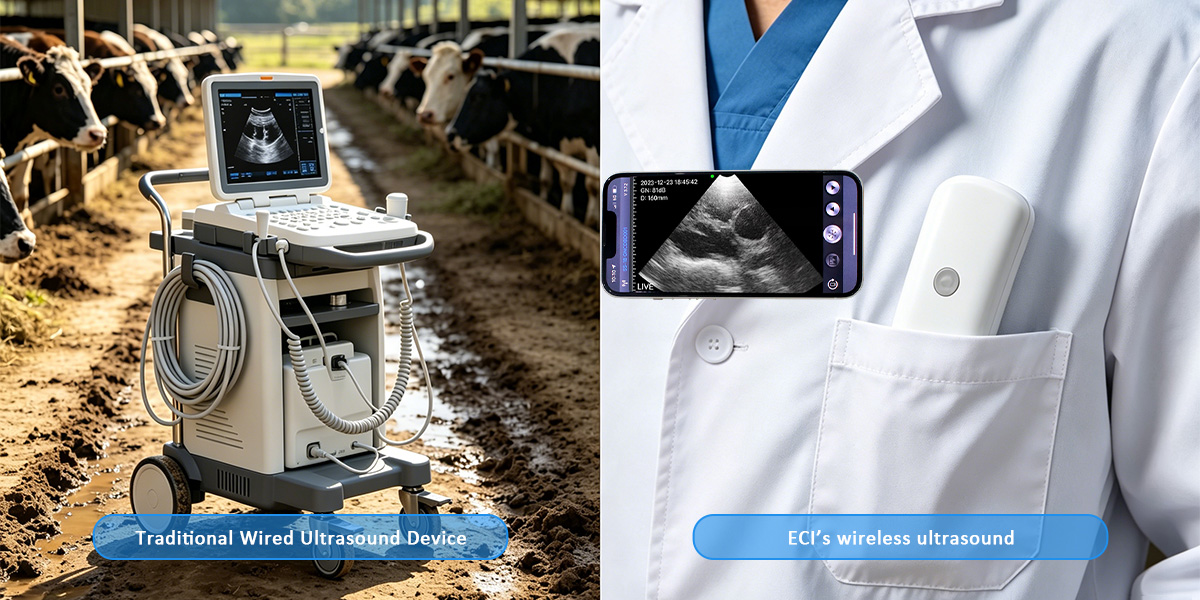
The most obvious advantage is portability. Traditional Veterinary Ultrasound Machines are heavy—often 5 to 10 kilograms or more—and require a cart or a table. ECI’swireless ultrasound, by contrast, weigh between 240 and 450 grams. A veterinarian can carry one in a coat pocket and pull it out when needed. The ECI-V1, designed for pigs and sheep, weighs just 240 grams and runs on a 3,400mAh battery that lasts over four hours. The ECI-X6, built for larger animals like cattle and horses, weighs 400 grams and connects directly to a phone or tablet via Type-C, with no battery to charge.
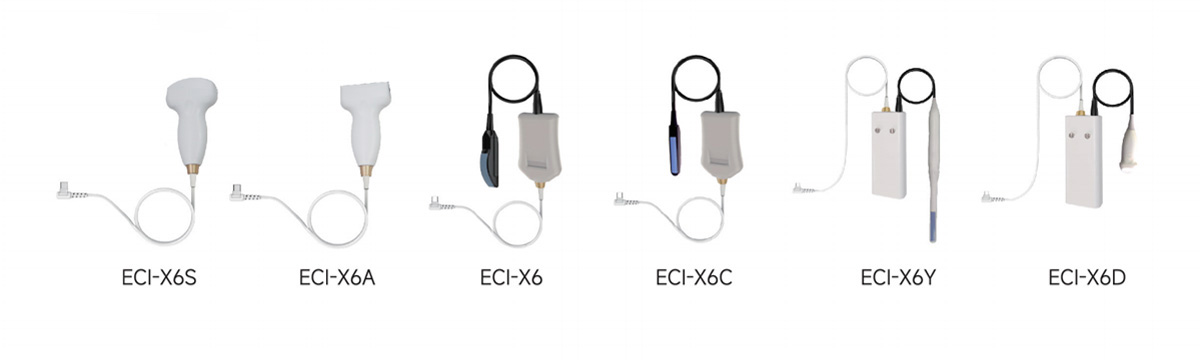
That simplicity matters. In a cattle barn or a sheep station, there is no outlet nearby. There is no clean table to set up a machine. There is often mud, dust, and water. Wireless Ultrasound eliminate the need for power cords and data cables. They also eliminate the need to carry a separate monitor—the phone or tablet that the veterinarian already has in hand becomes the display.
Built for the Conditions
Farms are not clinics. They are wet, dirty, and rough on equipment. ECI Group has addressed this with IPX6 waterproof ratings across most of its wireless product line. The scanners can be rinsed directly under a tap after use, which is not just convenient—it is essential for biosecurity. When moving between pens or farms, being able to wash and disinfect a device quickly reduces the risk of spreading disease.
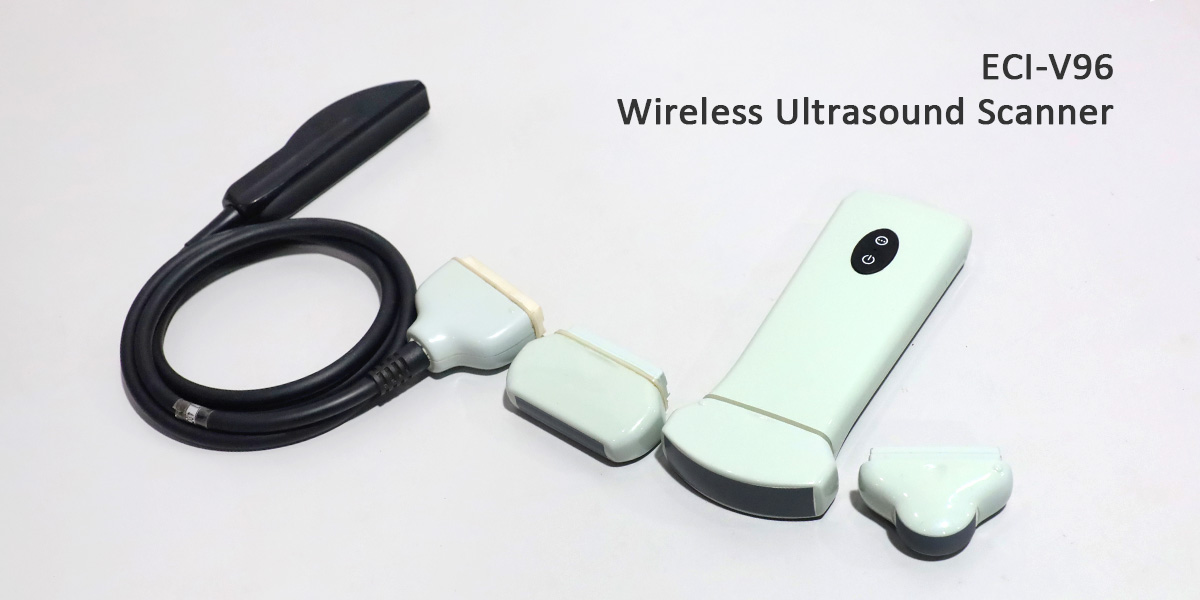
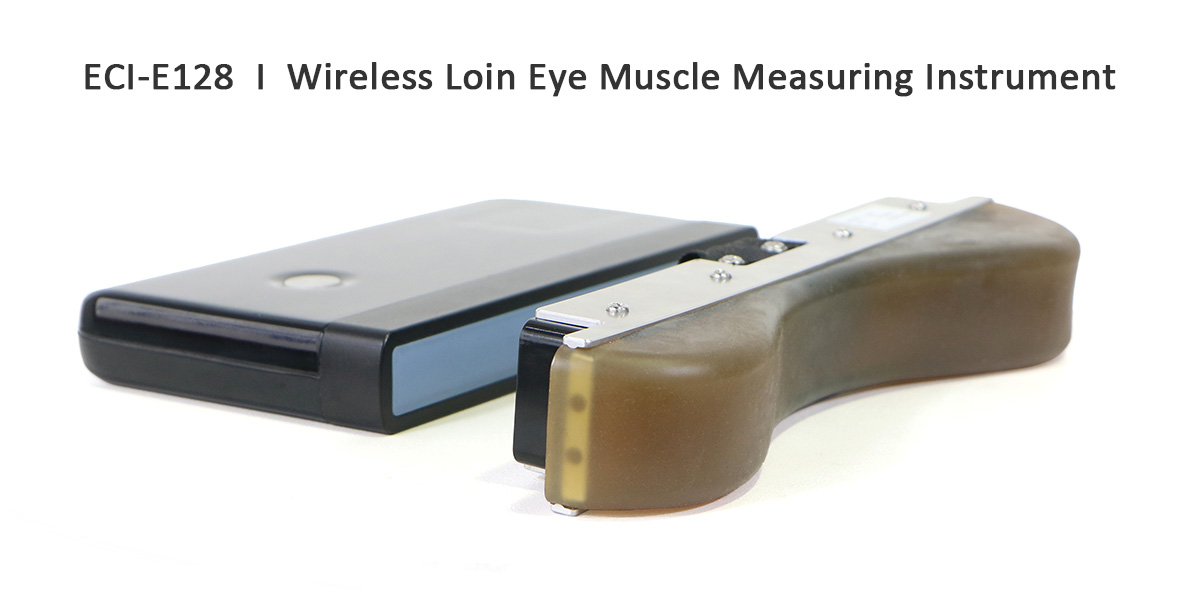
The probes are also designed for specific animals and specific tasks. The ECI-V96, for example, has a removable probe head that can be swapped between linear, convex, micro-convex, and rectal convex arrays. That means one device can handle pregnancy detection in sows, back-fat measurement in cattle, and soft-tissue exams in small animals, simply by changing the probe. The ECI-E128 is purpose-built for measuring back-fat thickness and eye muscle area in pigs, cattle, and sheep—data that helps farmers adjust feed rations and improve herd productivity.
Real Impact on the Ground
The point of all this technology is not the technology itself. It is what it allows veterinarians and farmers to do. A wireless ultrasound means a veterinarian can scan an animal in its own pen, without moving it. It means pregnancy checks can be done earlier and more frequently, catching non-pregnant sows sooner and reducing the feed wasted on empty animals. It means a farmer in a remote area can send ultrasound images to a specialist for a second opinion, because the images are stored on a phone and can be shared instantly.
None of this is revolutionary in human medicine, where wireless ultrasound has been available for years. But in veterinary practice—especially in livestock production—the shift from cart-based to handheld wireless is still underway. ECI Group is one of the companies pushing that shift forward, not by inventing new physics, but by building equipment that actually works in the places where veterinarians work.
ECI Group has been at this since 2009. It now distributes to more than 20 countries across North America, Europe, and Asia. The products are not fancy. They are functional, durable, and priced for the reality of commercial farming. And for the veterinarians who use them, that is exactly what matters.